- Home
- Glossary
Reference Terms and standards
Valve & standards glossary
This glossary defines the terms a specifying engineer meets on a valve datasheet, enquiry or inspection report: the governing standards such as ASME B16.34, API 598, API 6D, ISO 5208 and EN 10204; rating language such as pressure class, WOG and Cv/Kv; construction terms such as trim, seat leakage rate, end connection and body material group; and the application vocabulary of balancing valves, PICVs, pressure-reducing valves, steam traps and strainers. Each entry is short, plain and cross-linked.
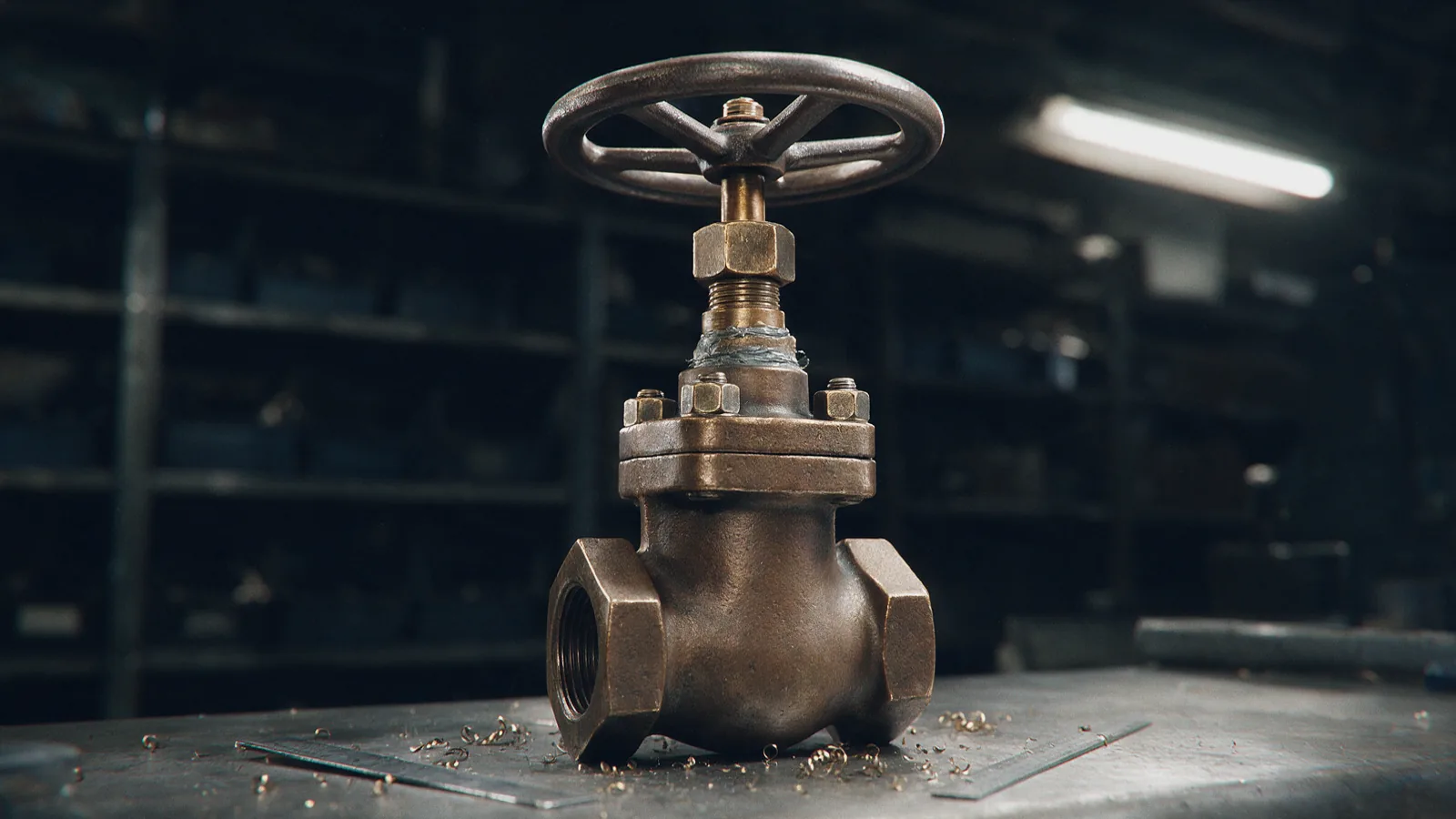
Standards are summarised, not reproduced. Each entry says what the document fixes and where it is silent; every figure is a reference value to be confirmed against the current edition of the standard and the manufacturer's rating table. The method behind the terms is in the four guides: valve selection, district cooling & HVAC, steam & pressure, sourcing & documentation, and in Guides.
A
- ASME B16.34
- The American Society of Mechanical Engineers standard for valves with flanged, threaded and welding ends. What it fixes: the pressure-temperature rating tables by pressure class (150 to 4500) and material group, the minimum wall thickness, the shell and seat test requirements, and the marking a valve must carry. It is the document behind every class-rated steel valve on a Gulf specification and behind the rating instrument on this site's homepage. Where it is silent: it does not choose a valve type, a seat material or a leakage class for you, and it says nothing about fire-safety or fugitive emissions. Those are separate qualifications. The rating tables change between editions, so every figure quoted from it on this site is a reference value to be confirmed against the current edition and the manufacturer's own rating table. Source: asme.org. Deeper: ASME B16.34 pressure-temperature ratings.
- API 598
- American Petroleum Institute standard for valve inspection and testing. What it fixes: the shell test, the backseat test and the seat tests (closure tests at high and low pressure) that a finished valve undergoes before shipment, the test durations by size, and the allowable leakage for metal-seated and resilient-seated valves. It is the test document most steel-valve specifications call for, and the one a test report should name. Where it is silent: it does not rate the valve (that is ASME B16.34), does not specify materials, and is not a certificate of the body material. The leakage tables differ between editions; confirm the current one. Source: api.org. Deeper: valve documentation.
- API 600
- The API standard for bolted-bonnet steel gate valves for petroleum and natural-gas service. What it fixes: the design (wall thickness in excess of ASME B16.34 minimums, stem diameter, bonnet bolting, trim numbering, face-to-face dimensions by reference to ASME B16.10), so that a gate valve bought to API 600 from any manufacturer has the same robustness. Where it is silent: it covers gate valves only, not ball, globe or check, and it does not replace the rating table; pressure-temperature still comes from B16.34. Confirm the current edition. Deeper: gate vs ball vs butterfly for isolation.
- API 6D
- The API specification for pipeline and piping valves: ball, check, gate and plug valves for pipeline transportation systems. What it fixes: design, materials, testing, marking and documentation for valves in the pipeline industry, including double-block-and-bleed and double-isolation-and-bleed definitions, trunnion-mounted ball valve requirements and extended test durations. Its fire-type test companion is API 6FA. Where it is silent: it is not written for building services or general industrial valves, and a 6D valve is usually more than a chilled-water line needs. Editions change; confirm the current one. Deeper: API 607 vs API 6FA.
- API 607
- The API fire test for quarter-turn valves with non-metallic seats: ball, butterfly and plug valves with soft seats. What it fixes: a valve is exposed to a defined fire for a defined period and then tested for leakage through the seat and to atmosphere, both during and after the burn; a design that passes may be marked fire-safe or fire-tested. Where it is silent: it qualifies a design, not every individual valve, and it says nothing about fugitive emissions, which is ISO 15848-1. Metal-seated and API 6D valves use API 6FA instead. Confirm the current edition. Deeper: fire-safe valves: API 607 vs API 6FA.
- Actuator
- The device that moves a valve instead of a hand: electric, pneumatic or hydraulic, quarter-turn for ball and butterfly valves, multi-turn or linear for gate and globe. Specified by the valve's torque or thrust, the supply available, the fail position on loss of power or air, and the duty cycle. See actuators, dampers and fittings.
B
- Balancing valve
- A valve that sets a circuit's flow to its design value. A static balancing valve is a calibrated throttle with test points, set once at commissioning; a dynamic or automatic balancing valve holds a set flow as pressure changes. In chilled-water systems the choice between a balancing valve and a PICV decides how the terminal behaves at part load. Deeper: PICV vs balancing valve.
- Body material group
- The grouping of pressure-retaining materials used by ASME B16.34 so that one rating table serves many grades. Group 1.1 covers common carbon steels such as A216 WCB and A105; stainless and alloy grades sit in other groups with their own tables. The group, not the brand, decides the allowable pressure at temperature. Deeper: valve selection by standard.
C
- Cv / Kv
- Flow coefficients. Cv is the US gallons per minute of water at 60 °F that pass a valve at a pressure drop of 1 psi; Kv is the cubic metres per hour at a drop of 1 bar. Kv is roughly 0.865 Cv. Both describe a fully open valve; for control and balancing valves the figure at each position matters more than the maximum. Deeper: district cooling and HVAC.
D
- ΔT (delta T)
- The temperature difference between supply and return. In district cooling it is the number the whole plant is designed around: low ΔT means the same cooling needs more flow, more pump power and more chiller capacity. Valve selection affects it directly: a passing isolation valve, a control valve with poor authority or an oversized PICV all lower it. Deeper: district-cooling valve selection in the Gulf.
E
- EN 10204 3.1
- EN 10204 is the European standard that defines the types of inspection document supplied with metallic products. What it fixes: type 2.1 (declaration of compliance), type 2.2 (test report with non-specific results), type 3.1 (inspection certificate with specific test results, validated by the manufacturer's inspection representative independent of production) and type 3.2 (as 3.1, also validated by a purchaser's representative or a third-party inspector). A 3.1 certificate is what most engineers mean by a mill test certificate for a valve body. Where it is silent: it defines the document, not the tests. The chemistry and mechanical properties come from the material standard. It does not certify the finished valve's performance; that is the test report. Confirm the edition in force. Deeper: MTCs and test certificates.
- End connection
- How the valve joins the pipe: flanged (ASME B16.5 up to NPS 24, B16.47 above; EN 1092 for PN flanges), threaded (NPT or BSP), socket-weld, butt-weld, wafer or lug for butterfly valves, and grooved for building services. The connection must match the pipe standard and the rating; it is the second most common omission on an enquiry after the temperature. Deeper: industrial valves.
F
- Fire-safe
- A valve design that has passed a fire test (API 607 for soft-seated quarter-turn valves, API 6FA for API 6D valves, or ISO 10497) and limited leakage during and after the burn. It is a qualification of a design, proven by a test report, not a property every valve automatically has. Deeper: API 607 vs API 6FA.
- Fugitive emissions
- Leakage of the process fluid to atmosphere past the stem seal and body joints, as opposed to leakage through the seat. Classified by ISO 15848-1 into tightness classes over mechanical and thermal cycles. A fugitive-emission class is a separate qualification from fire-safety. Deeper: sourcing and documentation.
I
- ISO 5208
- The International Organization for Standardization standard for pressure testing of metallic industrial valves. What it fixes: the shell test and the seat test. Its distinctive contribution is leakage rates expressed as classes: rate A (no visually detectable leakage for the duration of the test) through rates B, C, D and onward, each a stated volume per unit of nominal size per unit time. A specification that says "leakage rate A to ISO 5208" has defined bubble-tight shut-off precisely. Where it is silent: it does not rate the valve or specify its materials, and it is not API 598. The two documents are used by different specifying communities and the allowable leakages are not identical. Confirm the current edition. Source: iso.org. Deeper: test certificates.
- ISO 15848-1
- The ISO standard for measurement, test and qualification procedures for fugitive emissions from industrial valves. What it fixes: the type-test method by which a valve design is classified for stem-seal and body-seal tightness (using helium or methane as the test fluid) across defined numbers of mechanical cycles and thermal cycles, giving a tightness class, an endurance class and a temperature class on the certificate. Where it is silent: it qualifies a design by type test; production testing is part 2. It does not cover seat leakage, pressure rating or fire-safety. Confirm the current edition. How the classes read on a certificate is set out in the ISO 15848-1 fugitive emission classes guide. Source: iso.org. Deeper: sourcing and documentation.
M
- MTC (mill test certificate)
- The common name for the material certificate that accompanies a valve body or a pressure-retaining component. In practice it is an EN 10204 type 3.1 inspection certificate stating heat number, chemistry and mechanical test results for the material. It proves what the body is made of; it does not prove the finished valve was pressure-tested. Deeper: MTCs and test certificates.
N
- NACE MR0175
- NACE MR0175 / ISO 15156 is the standard for materials used in hydrogen-sulphide-containing (sour) environments in oil and gas production. What it fixes: which materials, in which condition, at what hardness, are acceptable for sour service, so that a valve does not fail by sulphide stress cracking. Where it is silent: it is not a valve standard and says nothing about pressure rating or testing; it restricts the material choice that the other standards then work within. Compliance is stated by the manufacturer for the specific valve and must be requested on the enquiry. Confirm the current edition. Deeper: valve selection by standard.
P
- PICV (pressure-independent control valve)
- A control valve with a built-in differential-pressure regulator, so that the flow at any valve position is independent of pressure changes elsewhere in the system. It replaces a control valve and a balancing valve with one body and holds design flow at the terminal as the network varies. Deeper: PICV vs balancing valve and HVAC and district-cooling valves.
- Pressure class
- The rating family of a flanged or steel valve under ASME B16.34 and B16.5: Class 150, 300, 600, 900, 1500, 2500 and 4500. The class is not a pressure in bar: the allowable working pressure for a class falls with temperature and differs by material group, and is read from the table. Deeper: ASME B16.34 ratings.
- PRV (pressure-reducing valve)
- A self-acting valve that holds a set downstream pressure regardless of upstream variation and flow. Sized on flow, inlet range and set outlet pressure from the manufacturer's capacity table, not on pipe size. Used on steam, compressed air and water. Deeper: how to size a pressure-reducing valve.
S
- Safety valve vs relief valve
- Both protect against overpressure by opening automatically. A safety valve pops fully open at set pressure and is used on compressible fluids (steam, air, gas); a relief valve opens in proportion to the overpressure and is used on liquids; a safety-relief valve does either. Set pressure and capacity belong to the protected equipment's design case. Deeper: steam, pressure and protection.
- Seat leakage rate
- The permitted leakage through a closed valve's seat under test, stated as a class (ISO 5208 rate A, B, C, D…) or a volume per size per time (API 598), or for control valves as an FCI 70-2 class. Resilient seats are expected to be bubble-tight; metal seats are allowed a measured leakage. Deeper: test certificates.
- Steam trap
- An automatic valve that discharges condensate, air and non-condensable gases from a steam line while holding back live steam. Three families: thermodynamic, mechanical (float or inverted bucket) and thermostatic. Chosen by application first, then sized on condensate load and differential pressure. Deeper: steam trap selection guide.
- Strainer
- A body containing a perforated or mesh screen that catches debris before it reaches a valve, trap, meter or heat exchanger. Y-pattern and basket are the usual forms; mesh size is a balance between the protection the downstream equipment needs and the pressure drop the system can afford. Deeper: pressure, safety and steam valves.
T
- Trim
- The internal, wetted, replaceable parts of a valve that contact the flow: seat, disc or ball, stem and, in gate and globe valves, the backseat and guides. Trim material is chosen separately from the body: API 600 numbers the common gate-valve trim combinations (13 Cr, stellite-faced and so on). Deeper: industrial valves.
W
- WOG
- Water, oil, gas: a single cold working pressure marked on many bronze, brass and small ball valves (for example 600 WOG). It has no temperature curve behind it and is not an ASME class; the manufacturer's own derating applies above ambient. Deeper: pressure class vs WOG.
Reference values: confirm against the current edition of the standard and the manufacturer's rating table. Sources: asme.org · api.org · ISO 5208 · ISO 15848-1 · DFT check valves.
Enquiry Dubai
A term on your datasheet that is not here?
Send the datasheet with the service condition (medium, pressure, temperature, size, quantity) and the reply defines it against the standard it comes from.
Send an enquiry