- Home
- Valve selection
- Actuators, dampers & fittings
Actuators, dampers & fittings
Flowsynergy supplies pneumatic and electric actuators, industrial dampers for air and flue-gas ducts, and pipeline fittings in carbon steel, stainless and copper-alloy grades. Actuators are sized on valve torque with a safety factor, then matched to signal and fail position. Dampers follow duct pressure, temperature and leakage class. Fittings follow the pipe material, rating and end connection.
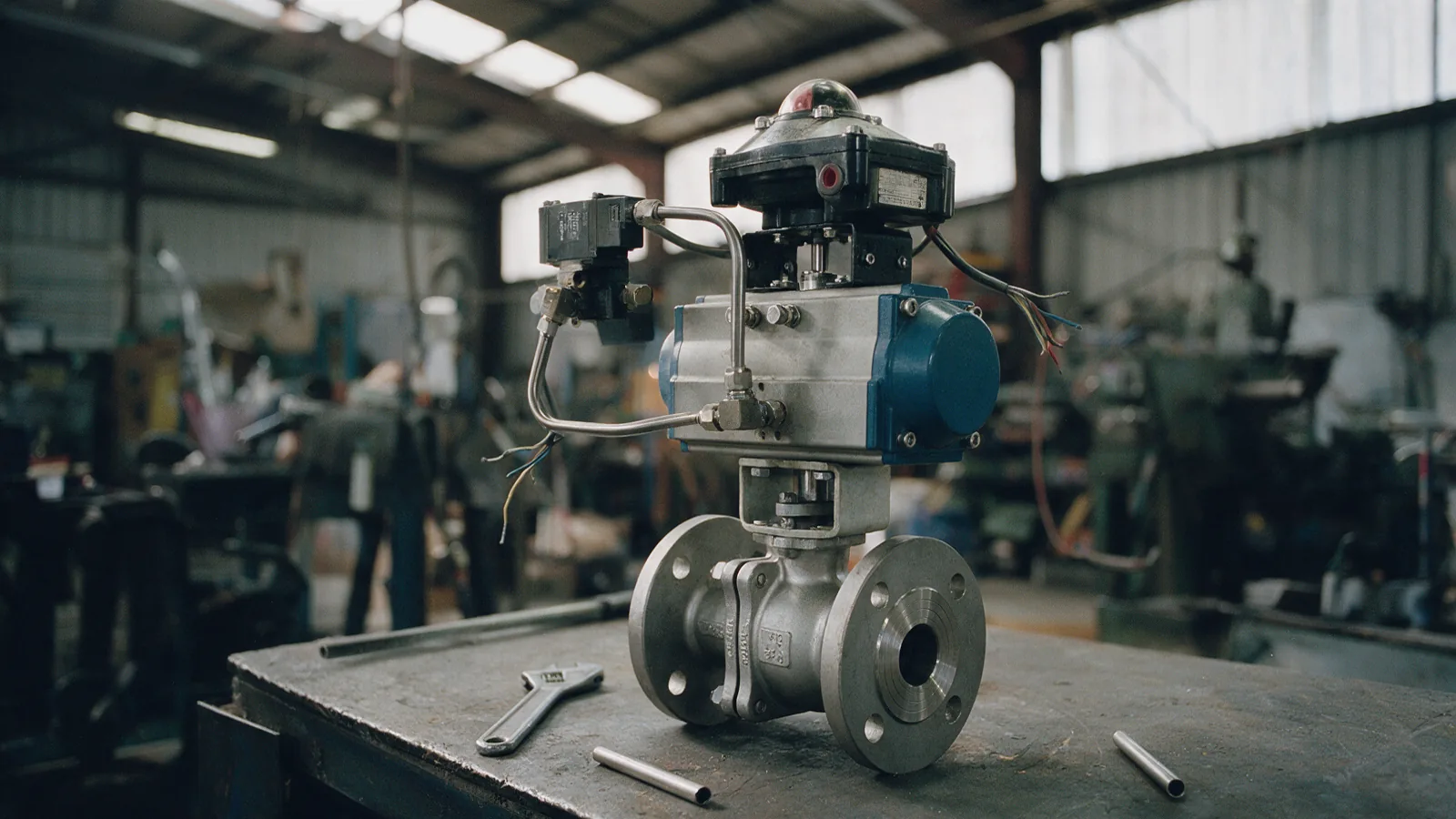
01Actuators, dampers and pipeline fittings we supply
This page covers the equipment around a valve order. Actuators turn a manual valve into an automated one, pneumatic or electric. Industrial dampers isolate, control and back-draft-protect air and flue-gas streams. Pipeline fittings and connectors are the joints the line is assembled from: flanges, elbows, tees, reducers, unions.
All three are specified like the valves: from the service condition, against the governing standard, with documents requested on the enquiry. The valve selection guide carries that method; this page applies it to the three families above.
02Actuator selection: torque, fail position and control signal
Four questions size an actuator, asked in order. Torque: seated and running torque at the design differential pressure, taken from the valve maker's table, never estimated. Apply the actuator maker's safety factor over it. Duty: on-off a few times a day is a different machine from continuous modulation. Fail position: what the valve does on loss of air, and on loss of signal, stated separately. Signal: what the control system speaks.
Duty to actuator: six common cases
| If the duty is | Torque & duty cycle | Fail position | Signal | Actuator |
|---|---|---|---|---|
| Quarter-turn isolation, small bore | Seated torque modest; sizes to about DN 150 | Fail-closed or fail-open by spring | On-off, solenoid pilot with limit switches | ChooseRack-and-pinion pneumatic, spring return |
| Quarter-turn isolation, large bore or high ΔP | Torque climbs with bore and differential; breakaway governs | Spring return where the process demands it | On-off, with position feedback | ChooseScotch-yoke pneumatic, or electric with a quarter-turn gearbox |
| Modulating control | Continuous duty cycle; torque at mid-travel governs | Usually stay-put; spring where the process demands | 4 to 20 mA or 0 to 10 V with a positioner | ChooseElectric modulating, or pneumatic with a positioner |
| Multi-turn gate or globe | Thrust and stroke as well as torque; long travel | Stay-put, with handwheel override | On-off, seated on torque and position limits | ChooseMulti-turn electric actuator |
| Infrequent operation, manual acceptable | Rim-pull above about DN 200 exceeds one operator | Stays where it is left | None | ChooseGear operator with handwheel |
| Fail-safe demanded, no air on site | Any size the spring or reserve can drive | Fail-safe by spring return or stored energy | On-off or modulating | ChooseSpring-return electric, or electric with a stored-energy reserve |
03Pneumatic versus electric, and when a gearbox is enough
Pneumatic actuators are simple, fast and fail-safe with a spring. They stay the default for on-off duty where instrument air exists. Their cost is the infrastructure: dry air, tubing, solenoids and filters. Electric actuators need only a cable. They give precise positioning and clean feedback, which suits modulating duty and remote sites. Their fail-safe costs extra.
The third option is no actuator. A valve operated a few times a year does not repay automation. A gear operator brings a large valve's rim-pull within one person's effort, and never loses its air supply. Automation buys frequency, remoteness, interlocks or a fail action. If the duty needs none of the four, specify the gearbox.
04Mounting interfaces: quarter-turn and multi-turn stem patterns
The valve-to-actuator interface is standardised, so the pairing bolts up rather than being fabricated. Quarter-turn valves carry an ISO 5211 pad: a flange designation and drive size that fix the bolt circle and stem engagement (what the F number on an ISO 5211 pad fixes). Order valve and actuator against the same pad. Without it you buy an adaptor bracket, a coupling and backlash at the seat. Multi-turn gate and globe valves use the ISO 5210 equivalent, transmitting thrust as well as torque.
Dampers have no universal pad. The damper maker supplies the bracket and drive linkage, so damper and actuator are best bought as one assembly. State the pad designation on every automated line item, or ask us to confirm it from the valve maker's data.
05Industrial dampers: isolation, control and backdraft
A damper is selected the way a valve is, with the duct as the line. Isolation dampers close a duct for maintenance or fire strategy, with seals chosen for the leakage class. Control dampers modulate flow: opposed blades give the more linear characteristic, parallel blades suit open-shut and mixing duty. Backdraft dampers are the duct's check valve. The governing figures are duct pressure, temperature, velocity and leakage class, named with its scheme.
Specify the duty first. Send the medium, pressure, temperature, size and quantity. View our trading brands or ask our Dubai team to confirm a suitable product.
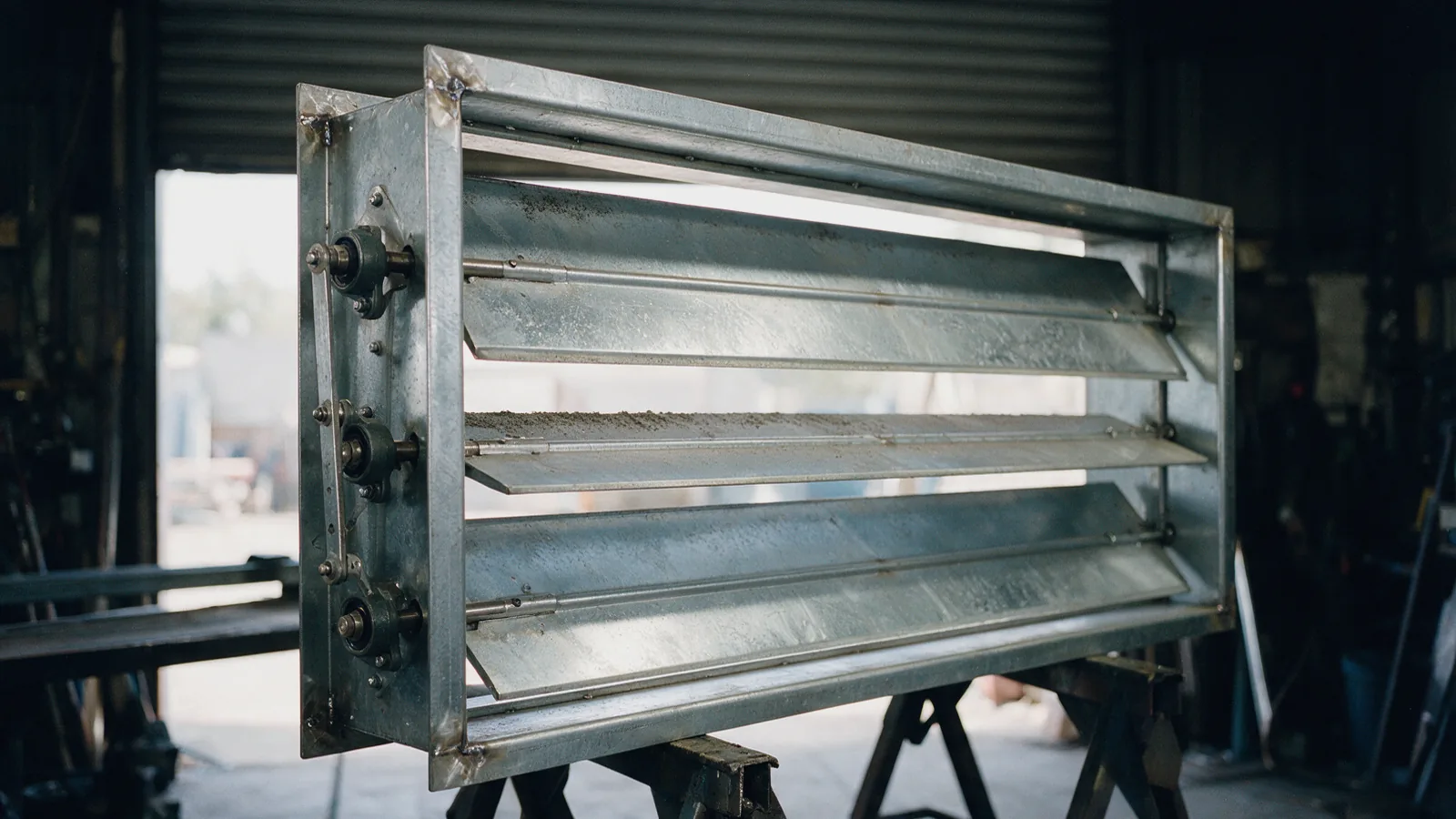
06Damper leakage and materials for hot and corrosive gas
Damper leakage is quoted in classes, and classes belong to schemes. Building-ventilation dampers are classed under EN 1751. Industrial and process dampers are usually qualified to AMCA test methods or the purchaser's own specification. A class number without its scheme is not a specification. State the pressure at which the leakage is quoted.
Materials follow the gas stream. Galvanised steel serves clean building air. 304 and 316 stainless take humid, coastal and washed air. Flue and process gas push alloys, seals and bearings up with temperature. Thermal growth at the jamb must be designed for. On the Gulf coast, external dampers earn stainless frames and shafts.
Reference values: confirm against the current edition of the standard and the manufacturer's rating table.
07Pipeline fittings: grade, pressure rating and end connection
Fittings are specified by three coordinates. Material grade matches the pipe: carbon steel with carbon-steel line pipe, austenitic stainless where the medium demands it, copper-alloy in building services. State the grade, because “stainless” is not a specification. Pressure rating comes from the governing dimension standard: butt-weld fittings take the matching pipe schedule, forged fittings carry their own class series. End connection decides the joint: welded for permanence, threaded for small bore, flanged where the line must come apart.
Matching saves site time: flange facing to gasket to bolting as one set, fitting schedule to pipe schedule, weld bevel to the welder's qualified standard. An order naming standard, grade, schedule and facing for every item arrives assemblable.
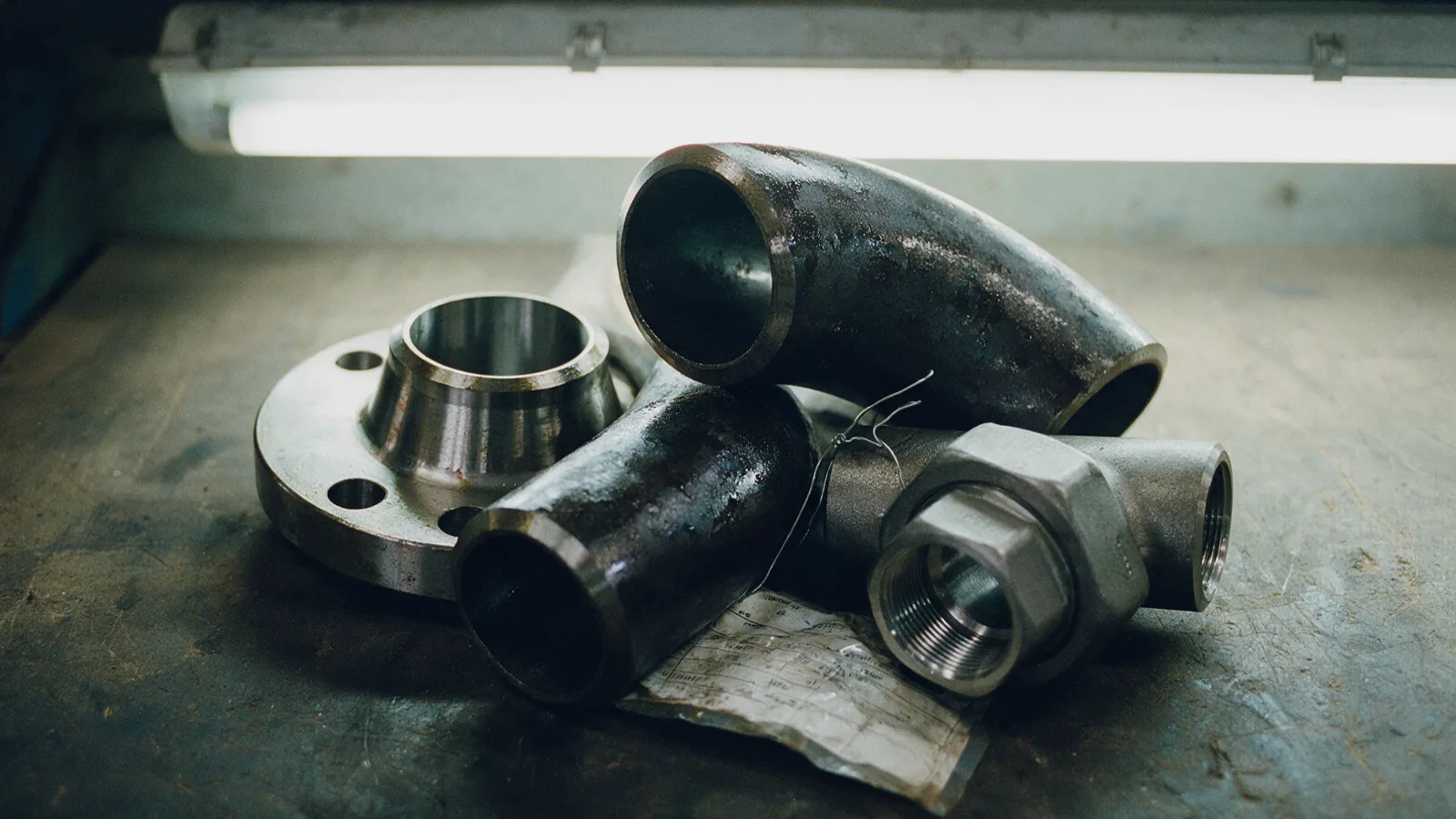
08Flange and fitting standards (confirm against the current edition)
Actuation, dampers and fittings each answer to their own documents. The ones a specification names are below, each defined in the glossary.
| Designation | What it fixes | Kind |
|---|---|---|
| ISO 5211 | Part-turn actuator attachment: flange and drive dimensions that let an actuator bolt on without adaptors. | Interface |
| ISO 5210 | Multi-turn actuator attachment for gate and globe valves. | Interface |
| ASME B16.5 | Pipe flanges NPS ½ to 24: dimensions, facings, bolting and class ratings. | Ends |
| ASME B16.9 | Factory-made wrought butt-welding fittings: elbows, tees, reducers and caps. | Fittings |
| ASME B16.11 | Forged socket-weld and threaded fittings, in pressure classes 2000 to 9000. | Fittings |
| ASME B16.25 | Butt-weld end preparation, so a welded valve or fitting mates with the pipe bevel. | Ends |
| ASME B16.20 | Metallic gaskets for pipe flanges: spiral-wound, jacketed and ring-joint. | Sealing |
| ASME B16.34 | Pressure and temperature ratings of the valve bodies these actuators mount to. | Ratings |
| EN 1092-1 | Circular flanges PN 6 to PN 100: the metric mating geometry. | Ends |
| EN 1751 | Air-terminal dampers: the leakage and strength test classes quoted for building ductwork. | Dampers |
| EN 10204 | Inspection document types for fitting and body materials: 2.2, 3.1, 3.2. | Document |
09Documentation to request: actuator, damper and fitting certificates
Automated equipment fails at handover for lack of paper more often than for lack of quality. Request the five documents below with the quotation. The sourcing & documentation guide explains each.
Actuator sizing and bench-test certificate
The sizing calculation against seated torque and the maker's safety-factor rule. Plus the bench stroke test: open and close times, fail action demonstrated.
Damper leakage test data
The leakage class with its scheme named, for the exact blade, seal and size ordered.
Fitting material certificates
EN 10204 3.1 for pressure-retaining fittings and flanges, tied to the heat numbers stamped on each piece.
General-arrangement drawing
Valve, actuator and mounting kit as one assembly: ISO 5211 pad designation, overall envelope, and the orientation the actuator maker permits.
Spares and seal-kit identification
Actuator seal kits, solenoid coils and damper blade seals by part number for the models supplied, so maintenance is a parts order.
10Product lines relevant to actuation, dampers and fittings
Specify the duty first. Send the medium, pressure, temperature, size and quantity. View our trading brands or ask our Dubai team to confirm a suitable product.
 KITZIndustrial valves
 DFTCheck valves
 EtelecElectrical connection protection
 KVC UK LtdIndustrial valves
 VogtIndustrial valves
Enquiry Dubai
Send the valve, the duct or the line. We size what bolts to it.
For actuation, state the valve, its seated torque, the fail position and the signal. For dampers, duct size, pressure, temperature and leakage class. For fittings, pipe material, schedule and ends. We reply with the selection and the documents that prove it.
Send an enquiry