FLOWSYNERGY
SectionSteam & pressure
TypeCategory
Updated2026-08-20
StatusReference
Menu
  1. Home
  2. Steam, pressure & protection
  3. PRVs, safety valves, traps & strainers

Pressure reducing, safety & steam

Flowsynergy supplies pressure-reducing valves, safety and relief valves, steam traps and strainers for steam, air, water and process lines across the Gulf. A pressure-reducing valve is sized on flow and pressure ratio, never pipe size. A safety valve is sized on relieving capacity. A steam trap is chosen by application and condensate load.

Reduce → protect → trap → strain. The steam & pressure protection guide covers the system design.

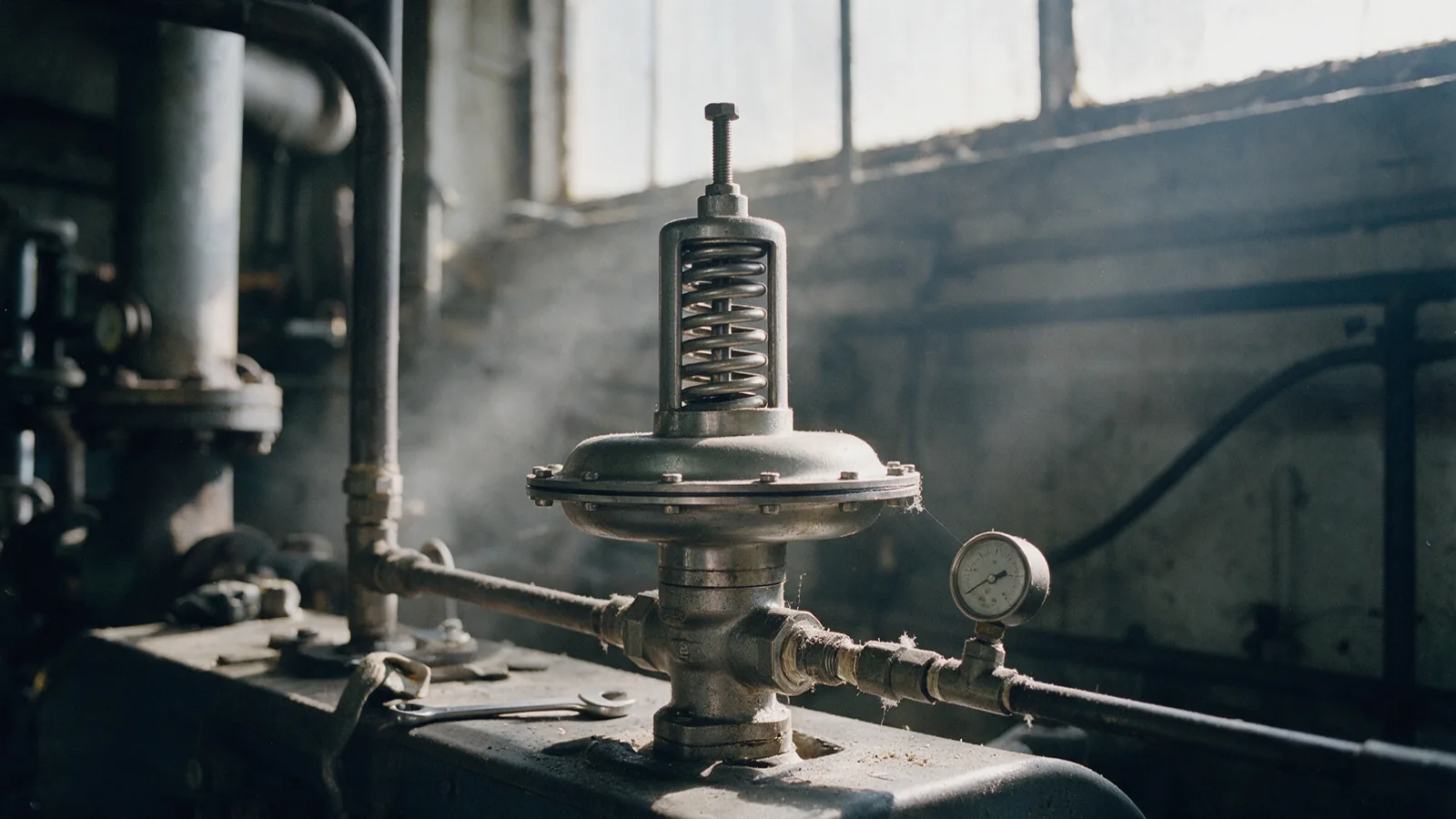
Stainless direct-acting pressure-reducing valve on a steam-plant bench
A direct-acting pressure-reducing valve, spring housing and adjusting screw above the diaphragm chamber. Illustrative image: stage one of the chain below.

01Pressure reducing, safety and steam equipment: one chain, not four products

A reducing station is four devices that only work complete. The pressure-reducing valve makes the low-pressure system possible. The safety valve makes its failure survivable. The steam trap keeps the line dry. The strainer keeps debris out of all three. Remove one stage and the failure appears one stage downstream.

The chain below names what each stage protects and the variable that sizes it. The wider system design lives in the steam & pressure protection guide.

The protection chain, stage by stage

Stage 1 · Reduce

Pressure-reducing valve

Guards
Everything downstream: the low-pressure system exists only because this valve holds set outlet pressure.
Sized on
Flow and the inlet-to-outlet pressure ratio, never pipe size. An oversized PRV hunts and seats hard.
Capacity chart · B16.34 body
Stage 2 · Protect

Safety valve

Guards
The reduced-pressure system against the PRV's one dangerous failure: failing open and passing full upstream pressure downstream.
Sized on
Required relieving capacity at set pressure. It must discharge the most a failed PRV can pass.
ISO 4126 · ASME BPVC
Stage 3 · Trap

Steam trap

Guards
Heat-transfer surfaces and pipework against condensate, the water that halves heat transfer and becomes water hammer at speed.
Sized on
Condensate load with a start-up factor, at the differential pressure across the trap.
Type by application
Stage 4 · Strain

Strainer

Guards
Pilot ports, trap mechanisms and seats, from the scale and debris every steam line carries.
Sized on
Screen mesh matched to the protected device, clean and fouled pressure drop checked.
Body to line rating
Reduce → protect → trap → strain. Sizing variables are the manufacturer's figures for the model selected, never the pipe size.

02Pressure-reducing valves: direct-acting versus pilot-operated, and why pipe size is the wrong basis

A PRV is sized on flow and pressure ratio, and nothing else. The line was sized for a velocity limit. The valve is sized for the capacity it must pass at the pressures it must hold. Matching the valve to the pipe usually oversizes it. An oversized PRV hunts around its set point and hammers its seat. The correct PRV is often smaller than its line.

The type follows the duty. On steady loads close to the valve, a direct-acting valve is compact and self-contained, at the price of droop. Where the load swings, a pilot-operated valve holds its set point across the range. Where the reduction ratio is large, split it across two stages in series.

PRV typeHow it works and where it belongsDuty
Direct-actingSpring and diaphragm act on the plug directly. Compact and simple. Outlet pressure droops as flow rises, so it suits steady loads close to the point of use.Point of use
Pilot-operatedA small pilot senses downstream pressure and drives the main valve. It holds the outlet within a narrow band across swinging flows.Mains & process
Two-stage stationWhere the ratio runs beyond roughly 10:1, or the load swings from near-zero to full, split the duty across two valves in series.High ratio
Type against duty. Capacity, droop and minimum stable flow are the manufacturer's figures for the model selected.

03Safety valves and relief valves: the difference, and sizing on relieving capacity

The two names are used loosely on site and precisely in the standards. A safety valve pops: at set pressure it opens rapidly to full lift, for compressible fluids such as steam, air and gas. A relief valve opens in proportion to overpressure, the usual choice on liquids. Both are chosen for the required relieving capacity of the worst credible case. Downstream of a reducing station that is the full flow a failed-open PRV can pass.

Set pressure, line pressure and the margin between them are decided together. A valve set too close to its operating pressure weeps and loses its set. Inlet pipework is kept short and generous, because pressure loss into the valve makes it chatter. We quote bench set-pressure verification, with a certificate against the serial number, under technical support & testing.

04Steam traps by application: thermodynamic, float, thermostatic and inverted bucket

A steam trap discharges condensate and holds back steam. No mechanism does that best everywhere, which is why four families persist. The question is not which trap is best but what the application discharges. A drip leg sheds small, steady loads. A heat exchanger sheds large, swinging loads at near-zero differential. Tracing wants sub-cooled discharge.

Trap familyMechanism and where it belongsApplication
ThermodynamicA single disc cycles on the pressure difference between flash steam and condensate. Small, robust and tolerant of water hammer. The mains-drainage and tracing default.Mains & tracing
Float & thermostaticA float discharges condensate continuously at steam temperature, with a built-in air vent. The choice for modulating heat exchangers and coils. Water hammer breaks the float.Process loads
Inverted bucketAn open bucket rises and falls on steam arrival: intermittent discharge, very tolerant of rough service. It needs a water seal to prime and vents air slowly.Rough service
Balanced-pressure thermostaticA capsule discharges condensate once it has sub-cooled a few degrees. Excellent air venting and compact. It holds condensate back, so it belongs on tracing and vents, not process.Tracing & vents
Family against application. Capacity at the actual differential pressure, not the catalogue maximum, sizes a trap.

05Strainers: Y-type, basket and duplex, and choosing the screen

A strainer is specified backwards. Start from the device it protects, take the manufacturer's screen recommendation, then choose the pattern. The Y-type is the steam default: compact, self-draining, with a blowdown valve on the cap. The basket pattern carries more screen area at a lower pressure drop, which suits liquid lines and pump suctions. A duplex basket switches flow between two chambers, so the screen can be serviced while the line runs.

Two figures matter on the enquiry: the mesh size the protected device needs, and the pressure drop at design flow, clean and fouled. The fouled figure is the one the system lives with. A strainer with no maintenance regime is a slow-closing valve: the screen loads and the protected device starves.

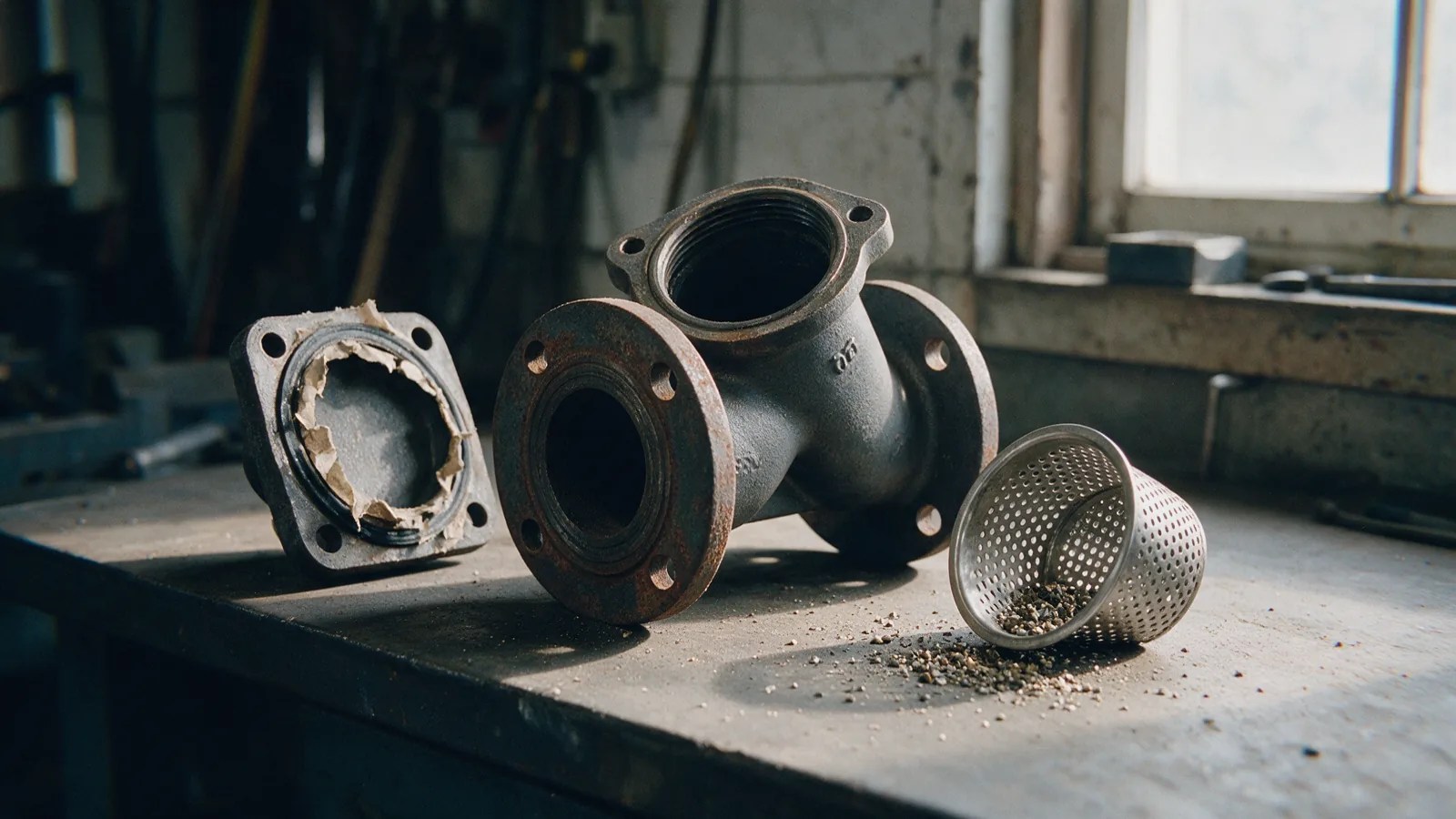
Flanged cast-iron Y-strainer with its cover unbolted and the mesh basket lifted out
A flanged Y-strainer with its cover unbolted and the mesh basket lifted out. Illustrative image: the pocket withdraws sideways, so clearance beside the line matters.

06Selecting by service condition: steam, condensate, air, water and process fluids

Saturated steam fixes its own temperature. Pressure and temperature move together, so stating the pressure states the body's thermal duty. At 10 bar g saturated steam sits near 184 °C on the IAPWS-IF97 tables. Bronze and iron bodies serve low-pressure sizes; cast steel takes over as pressure rises. Condensate is harsher: hot, gassy and erosive. Select return-line equipment for that.

Compressed air uses the same reducing logic with different internals: elastomers suited to oil-carrying air, and drain traps rather than steam traps. Hot water stations answer to the heating circuit's PN rating and temperature class. Process fluids add compatibility: every wetted material checked against the fluid on the enquiry, not at delivery. State the medium first. It reorders every other decision on this page.

Reference values: confirm against the current edition of the standard and the manufacturer's rating table.

07Pressure and temperature limits, body material and end connection

Every device is a pressure vessel. The body answers to the same rating system as any valve: a PN or ASME class read against the material group at design temperature. That temperature is set by the relief condition, not normal operation. The low-pressure side is rated for what the safety valve permits, not what the PRV delivers.

End connections follow line practice: threaded to about DN 50 and flanged to ASME B16.5 or EN 1092-1 above it, so the station lifts out as a unit at overhaul. Class ratings and material groups are covered on the industrial valves page; the designations live in the glossary.

08Water hammer, flashing and noise: the failures a wrong selection causes

Steam systems fail loudly, and each noise names its cause. Water hammer is condensate travelling at steam velocity into a fitting: an undrained main, a missing drip leg. The fix is drainage design, not a stronger fitting. Flashing is condensate re-boiling across a trap; undersized return lines then run as two-phase flow. PRV noise is velocity and pressure ratio, cured by staging the reduction, not by silencers.

Safety-valve chatter, rapid open-and-slam cycling, comes from an oversized valve or starved inlet pipework. It destroys the seat it exists to protect. Every failure here is a selection decision. That is why the schedule matters: medium, flow, both pressures and the differential at each device.
09Governing standards and test references (confirm against the current edition)

The chain answers to the pressure-equipment documents below. Each designation is defined in the glossary. None is a claim of accreditation; they are the references a specification calls up.

DesignationWhat it fixesKind
ISO 4126Safety devices against excessive pressure: safety-valve design, capacity certification and marking.Design
ASME B16.34Pressure and temperature ratings of the valve bodies. The class is read against the material group at design temperature.Ratings
ASME B16.5 / EN 1092-1Flange dimensions, facings and ratings for flanged ends on PRVs, safety valves and strainers.Ends
API 520 / 521 / 526Sizing, selection and installation of pressure-relieving devices, plus the flanged steel dimension series.Sizing
API 598 / ISO 5208Inspection and pressure testing: shell and closure tests, and allowable seat-leakage rates.Test
IAPWS-IF97The industrial formulation for the properties of water and steam: the saturation table every steam selection reads from.Reference
EN 10204Inspection document types: 2.2 non-specific, 3.1 mill-certified, 3.2 third-party witnessed.Document
Reference values: confirm against the current edition of the standard and the manufacturer's rating table.

10Documentation to request: test record, material certificate and capacity data

A safety valve without its test certificate protects nothing an inspector will accept. The five items below belong on the enquiry. The sourcing & documentation guide shows what each looks like.

  1. Set-pressure test certificate

    For every safety valve: set pressure, reseat pressure, test medium and date, tied to the nameplate serial number. We quote set-pressure verification: see technical support & testing.

  2. Capacity and sizing sheet

    The PRV's capacity chart for the selected size, and the safety valve's certified relieving capacity at set pressure. These two documents prove the chain protects.

  3. Material certificate

    EN 10204 3.1 for pressure-retaining bodies and springs where specified, tied to the heat numbers on the castings.

  4. Nameplate and marking record

    Set pressure, capacity, size and standard marked on each device, recorded against the line number it protects. This is the register a surveyor asks for first.

  5. Spares and trim identification

    Pilot, diaphragm, capsule and screen part numbers for the models supplied, so a maintenance stop is a parts order, not an engineering exercise.

Ask on the enquiry. A certificate that was never raised at manufacture cannot be raised later.

11Product lines relevant to steam and pressure protection

Specify the duty first. Send the medium, pressure, temperature, size and quantity. View our trading brands or ask our Dubai team to confirm a suitable product.

Lines listed by what they cover for steam and pressure duty. The full range is on the product-lines page.

Enquiry Dubai

Send both pressures and the flow, not a model number.

State the medium, the inlet and outlet pressure, the flow range and what the line feeds. We reply with the whole station: reducing valve, safety valve and set pressure, trap, strainer and the documents.

Send an enquiry
MediumSaturated or superheated steam, air, gas, water or process fluid
Inlet & outlet pressurebar g, both sides: the ratio sizes the PRV
Flow / capacitykg/h steam or m³/h liquid, maximum and minimum
Set pressureRequired relief setting and capacity, for safety valves