Selection record
The service condition, the recommendation made, and the rating data it was read from, so the reasoning survives the project.
Flowsynergy offers valve selection support, supply, testing, maintenance and repair. Selection sets class, body material, trim and end connection from the service condition. Testing covers shell and seat tests to recognised methods. Repair work ends in a record for each valve.
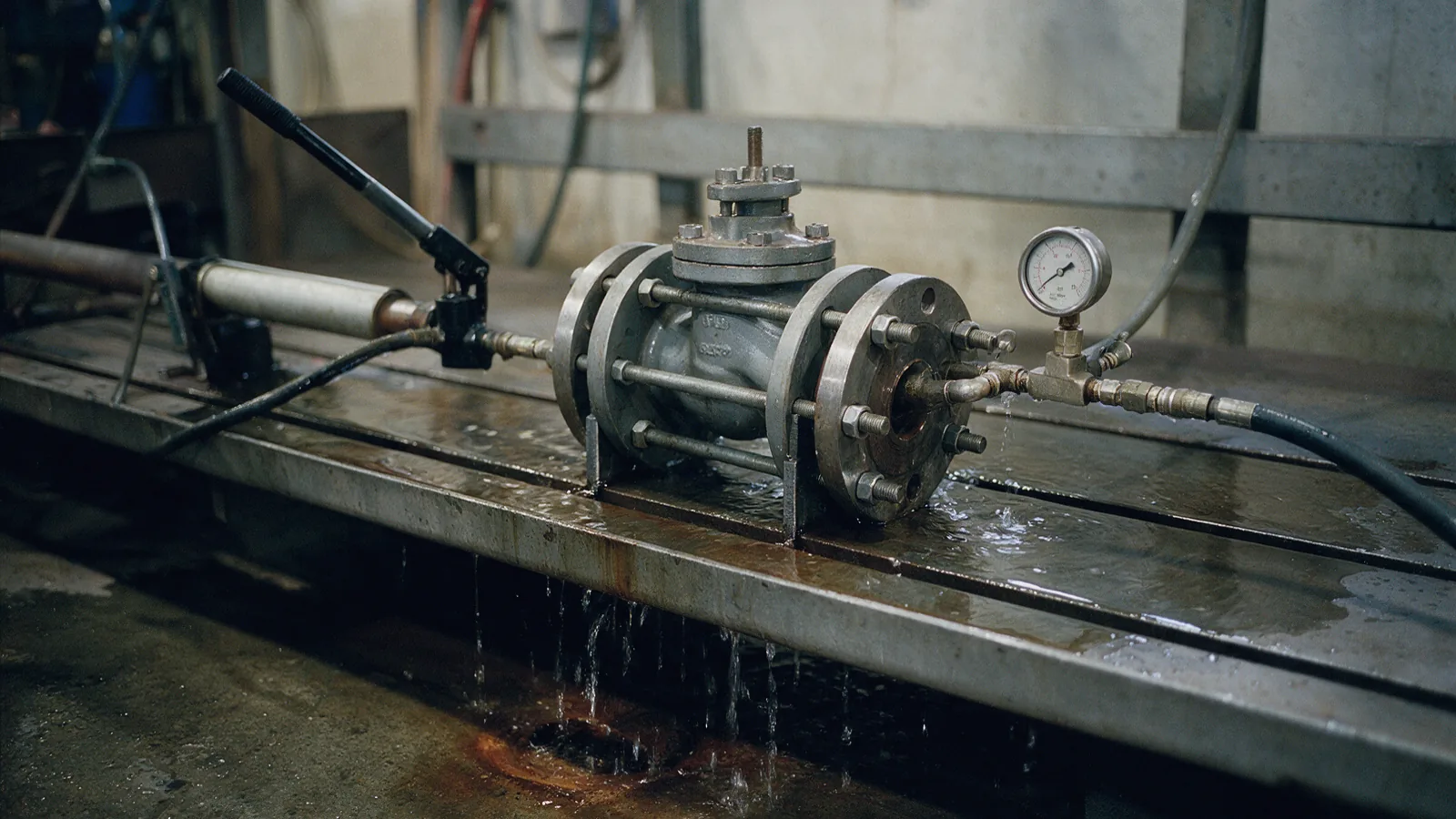
Three services sit around the valves we supply: selection support, testing, and maintenance and repair. Recommendations are read from published standards data. Every test or repair ends in a written record tied to the valve's tag.
None of this replaces the maker's type approvals or the project specification. It confirms the valve from the six lines we supply suits the condition, and that the paperwork proves it.
In full the method has six rungs. Each names what the client provides and what Flowsynergy resolves. An enquiry can enter at any rung.
The enquiry opens with the duty, never a part number.
Medium, operating and design pressure and temperature, line size, and the job: isolate, throttle, check or protect.
The framed duty, and a note of anything missing before selection can start.
The design point is read against published rating data.
The design pressure, usually the relief setting, and the design temperature.
The ASME B16.34 class and material group that hold that point, stated as reference data.
Certification is fixed at enquiry, not after delivery.
The project specification, and who will inspect or witness.
The EN 10204 certificate type, test records and any fire-safe or emission evidence to demand.
One condition, six product lines, one recommendation.
Any maker named in the specification, or approval list constraints.
The valve type, trim and end connection, drawn from the lines we supply.
Shell and seat behaviour is proven, not assumed.
The leakage class the specification calls for.
A test scope to recognised methods (API 598 or ISO 5208), with the observed result recorded.
A valve in service is inspected, repacked, reseated and re-tested.
Tag data, service history and the symptom.
The inspection findings, the work done, and a record issued for each valve.
Selection support is rungs one to four worked for you. From medium, pressure, temperature and size we resolve the valve type. We set the ASME B16.34 class and material group that hold the design point. Then the trim and the end connection. Each choice is read from published rating data, with its reasoning.
The method is public. The valve selection by standard guide walks it end to end, and the glossary defines every designation. The service adds the working, and a check across all six product lines at once.
A specification review runs the ladder in reverse. The document names a valve; we check the condition justifies it. The questions are always the same. Is the design pressure the relief setting, or the line pressure with no margin? Does the named class hold the design point for the named material group? Does the seat material survive the medium at temperature? Is the leakage class stated, and the certificate type named?
Most findings are silences, not errors: a leakage class never stated, a certificate type left open. Each silence becomes a cost or a dispute at delivery.
Valve testing is done to recognised methods: API 598 for the inspection and test programme, ISO 5208 for the seat-leakage rate classes. Each test is reported with its pressure, medium, duration and observed result.
| Test | What it proves | Method |
|---|---|---|
| Shell test | Body and bonnet hold pressure above rating, valve part-open. Proves the pressure envelope. | API 598 · ISO 5208 |
| Backseat test | The stem backseat seals with the packing slackened, where fitted. | API 598 |
| High-pressure closure | Seat holds near-rating differential pressure; leakage measured against the class allowed. | API 598 |
| Low-pressure closure | The seat holds low-pressure air or gas, the harder duty for a soft seat. | API 598 |
| Seat-leakage rate | The allowable leakage class, Rate A (no visually detectable leakage) through Rate G. | ISO 5208 |
Reference values: confirm against the current edition of the standard and the manufacturer's rating table.
Two qualifications are routinely mis-read. A fire-safe certificate (API 607 for soft-seated quarter-turn valves, API 6FA for API 6D and 6A valves) is a type test. It covers only the size range, class and seat material tested. It is evidence about the design, not a test on the valve you receive.
A fugitive-emission classification to ISO 15848-1 grades the stem sealing by tightness and endurance class. When a specification calls for either, ask the maker for the certificate and check its scope line against the order. Neither certificate replaces the production shell and seat tests in section 05.
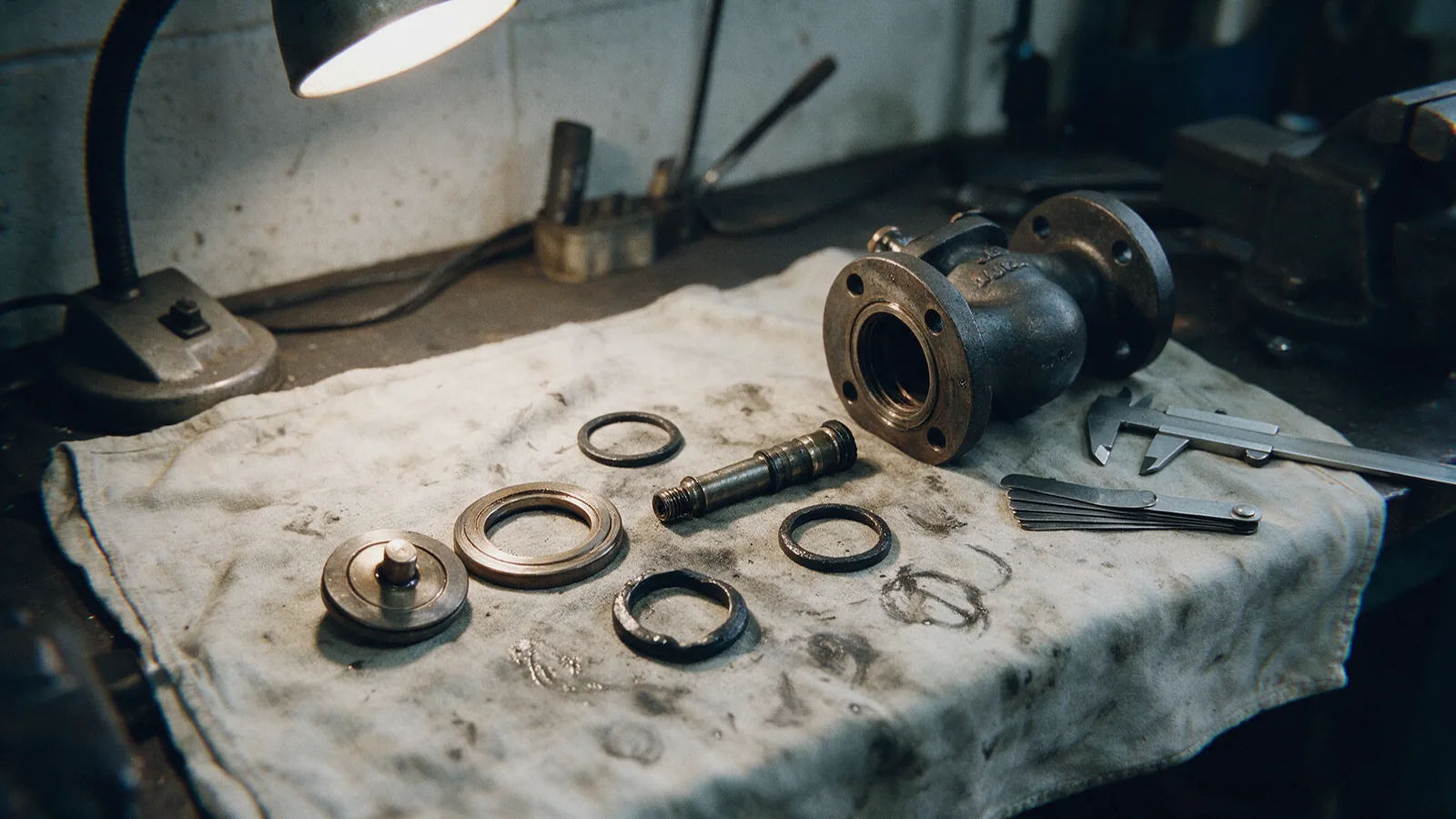
Maintenance on an industrial valve is four checks and two renewals. The checks: external condition and flange joints; stem movement through full travel; seat tightness closed; and on automated valves, actuator travel, torque and fail action. The renewals: gland packing, and seats and seals that wear at a rate set by the medium and the cycling.
Intervals are set by the duty and the site's own regime, so we publish no schedule here. What we hold to is the record. Each intervention closes with what was found, what was renewed and the re-test result.
The decision is economic, but the inputs are mechanical. Repair when the pressure envelope (body and bonnet) is sound and the wear is in renewable parts: packing, seats, seals, sometimes the disc or stem. Replace when the envelope is eroded, cracked or corroded, when spares no longer exist, or when the duty has changed. Repairing a valve into the wrong job schedules the next failure.
Every repair ends where a new valve begins: reassembled, re-tested to the same recognised methods, and recorded.
No. The material certificates belong to the original manufacture. A repair adds its own record: work done, parts fitted, re-test result. It does not reissue them.
Often, provisionally. Type, seat material, service and age narrow the cause. The verdict needs the valve on a bench, tested against the class it was sold to.
State the tag data and history on the enquiry. Scope is confirmed per enquiry; the method and the record are the same either way.
Everything on this page is scoped by published documents: test methods, qualification type-tests and certificate types. The glossary defines each designation.
| Designation | What it fixes | Kind |
|---|---|---|
| API 598 | Shell, backseat and closure tests, durations and allowable leakage by size and seat type. | Test |
| ISO 5208 | Pressure testing of industrial metallic valves: the seat-leakage rate classes. | Test |
| ASME B16.34 | Pressure and temperature ratings, wall thickness and the shell-test requirements for rated valves. | Ratings |
| API 607 / API 6FA | Fire type-testing of quarter-turn soft-seated valves and of API 6D / 6A valves. | Qualification |
| ISO 15848-1 | Fugitive-emission classification of stem sealing by tightness class and endurance. | Qualification |
| NACE MR0175 / ISO 15156 | Material and hardness limits for sour service, maintained by AMPP. | Material |
| EN 10204 | Inspection document types: 2.2 non-specific, 3.1 mill-certified, 3.2 third-party witnessed. | Document |
Two document streams meet at a valve: what we issue, and what the mill and maker must supply with the order. The sourcing and documentation guide covers the second. The four records below are the working set.
The service condition, the recommendation made, and the rating data it was read from, so the reasoning survives the project.
Method, test pressure, medium, duration and the observed leakage against the class allowed, not simply “passed”.
What was inspected, what was replaced, the re-test result and the as-left settings, tied to the valve's tag.
EN 10204 3.1 material certificates and any type-test evidence, requested with the order. A document not raised at manufacture cannot be raised later.
For a new selection, the selection guide is the method this page applies. For the paperwork, the documentation guide lists every certificate. The valves are on the industrial valves page, the lines on product lines, and every guide under Insights. To start, send an enquiry with the condition or the tag data.
Enquiry Dubai
For selection, state the service condition. For testing, maintenance or repair, state the tag data and the symptom. We reply with the recommendation or scope, the method, and the record you will hold.
Send an enquiry