- Home
- Industries
Industries we supply
Flowsynergy supplies valves and flow-control equipment across the UAE and the wider Gulf. Sectors served: building services and HVAC, district cooling, water and wastewater, power, oil and gas, and process. Each sector brings a different service condition. This page sets out the valve families, materials and standards each one calls for.
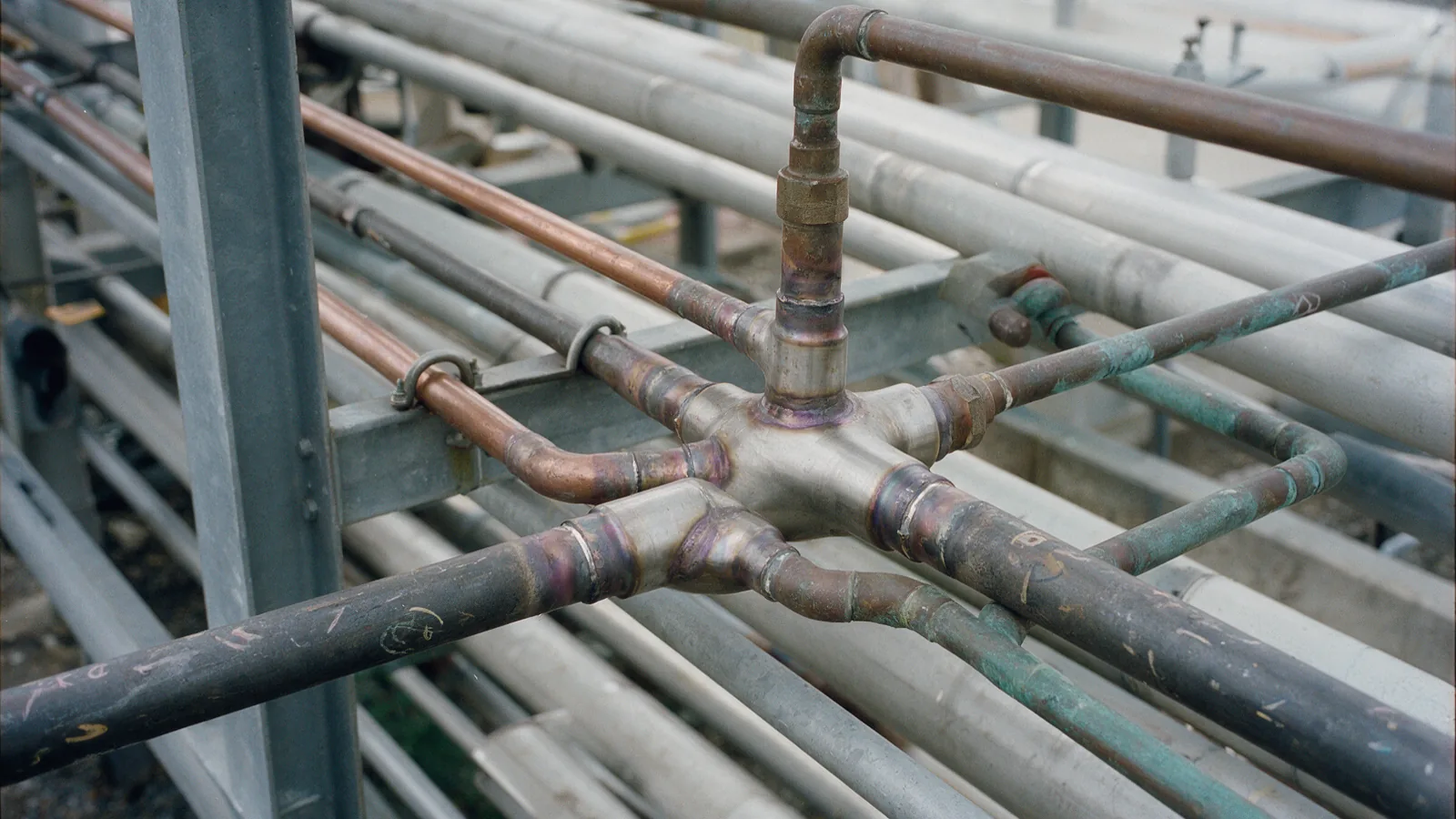
01Six sectors, and why the service condition differs
A district-cooling contractor and a gas-plant engineer share almost nothing but the word valve. The sector fixes the medium. The medium fixes the materials. The plant fixes the pressure and temperature band. The specification adds the qualification that gates acceptance: a fire-safe type test, a potable-water approval, a sour-service declaration or an emission class.
The grid below summarises the six sectors we supply across Dubai, the UAE and the wider Gulf. The sections after it give each sector its reasoning. The selection guide holds the general method.
02The industry × demand grid: condition, families, gate
Read each cell in three lines: the dominant service condition, the valve families the sector consumes, and the qualification acceptance gates on.
- Condition
- Chilled water, year-round load, high ΔT targets
- Condition
- Potable, treated effluent and Gulf seawater
- Condition
- Hydrocarbons, sour where wet H₂S is present
- Condition
- Steam at temperature, feedwater, bypass
- Condition
- Chilled and domestic water, air systems
03District cooling and HVAC: PICV, balancing and plant-room isolation
Dubai is one of the world's largest district-cooling markets, and Empower alone operates citywide plant. The economics are written into the valves. Buildings are billed on chilled water consumed, and contracts penalise a low return-temperature difference. So the terminal equipment that holds flow at design carries the money: PICV and balancing valves at every coil. See the PICV comparison.
Around them sit the plant-room families: large flanged butterfly valves on headers, gate and check valves on pumps, actuated isolation at the energy-transfer station. The HVAC and district-cooling category lists the equipment. The district-cooling guide carries the reasoning. The gate here is procedural, not metallurgical: commissioning-code flow verification, terminal by terminal.
04Water, wastewater and desalination: the material is the decision
Water splits into three duties with three material answers. Potable water is gated by wetted-material approval before any pressure question: dezincification-resistant brass, approved linings, every elastomer certified. Treated effluent wants resilient-seated butterfly and knife-gate valves that tolerate solids. Seawater and desalination turn on chloride pitting. Alloy performance proven under ASTM G48 puts super duplex and 6Mo alloys in, and standard 316 out.
The families are ordinary: butterfly, gate and check from the industrial valves category. That is why the specification gates on the material certificate, not the type. The selection guide works the material logic in order. The mill certificates that prove it are in the documentation guide.
05Oil, gas and petrochemical: the qualifications above the rating
Hydrocarbon service starts where other sectors stop. The pressure envelope is the easy part. API design documents and ASME B16.34 classes cover it. Three qualifications on top gate acceptance. A fire-safe type test (API 607 or 6FA) for soft-seated isolation. A sour-service declaration to NACE MR0175 / ISO 15156 (maintained by AMPP) wherever wet H₂S is present. Increasingly a fugitive-emission class to ISO 15848-1 on the stem sealing.
Each is certificate-borne, so the paper trail is part of the valve. The type-test certificate's scope line must cover the ordered size, class and seat material. Every wetted pressure-retaining part must appear on the sour-service declaration. The documentation guide shows what to demand. Technical support checks certificates against the order.
06Power generation: steam fixes its own conditions
In steam plant, temperature drives selection, not pressure. Saturated steam ties temperature to pressure; superheat pushes beyond it. The ASME B16.34 material group decides how much rating survives at the design temperature: carbon steel to about 425 °C, chrome-moly grades above. Trim goes metal-seated as a matter of course. Every protective device is sized against the relief setting, not the running pressure.
The consuming families sit in the pressure, safety and steam category: safety and relief valves to ISO 4126 practice, self-acting pressure-reducing stations, steam traps and strainers, with gate and globe isolation around them. The steam guide carries the sizing reasoning. The gate at acceptance is the rating arithmetic: class and group read at design temperature.
07Commercial and building services: many small decisions, two approvals
A commercial tower consumes valves by the thousand: brass and bronze ball valves on domestic water, butterfly valves on risers, PICV at fan-coil terminals, motorised dampers in the air systems, and the fittings that connect them. That is the HVAC category and the actuators, dampers and fittings category combined.
Two approval regimes gate the sector. Anything wetted by drinking water needs a recognised potable-water approval for the material and every elastomer in it. Anything in the fire-services scope carries its own listing regime, separate from the API fire type-tests of section 05. Between them sits the isolation comparison: which quarter-turn valve each size band wants.
08Process plants, food and pharmaceutical: clean duties, stainless answers
Process plant in F&B and pharmaceuticals runs two systems side by side: utility steam, treated like any steam system, and clean or culinary steam and CIP fluids, where the product touches the metal. The second gates on materials and finish: 316L stainless wetted parts, elastomers chosen for the cleaning chemistry, and finishes the process engineer specifies, not the valve standard.
The consuming families are stainless ball valves for isolation, steam traps on every clean-steam drop, and strainers ahead of any small port. That is the working end of the steam category, sized per the steam guide. Documentation follows the duty: EN 10204 3.1 certificates on wetted parts are the norm, per the documentation guide.
09Sector by sector: medium, pressure band, material, standard
The table compresses the six sections into one view. Every value is a usual starting point read from published standards data. The project specification and the manufacturer's rating table govern the final selection.
| Sector | Typical medium | Pressure band | Usual materials | Governing documents |
|---|---|---|---|---|
| District cooling | Chilled water | ≈ 6 to 25 bar g | Ductile iron · carbon steel · brass | BS 7350 · EN 593 |
| Water / desalination | Potable · seawater | PN 10 to 25 | DZR brass · duplex · super duplex | ASTM G48 · EN 1092-1 |
| Oil & gas | Hydrocarbons · sour gas | Class 150 to 2500 | Carbon steel · low-alloy · CRA trim | API 6D · NACE MR0175 |
| Power | Steam · feedwater | Class 300 to 2500 | WCB to WC9 chrome-moly | ASME B16.34 · ISO 4126 |
| Building services | Chilled & domestic water | PN 16 to 25 | Brass · bronze · ductile iron | EN 331 · EN 1092-1 |
| Process (F&B / pharma) | Clean steam · CIP | PN 16 to 40 | 316L stainless | ISO 5208 · EN 10204 |
Reference values: confirm against the current edition of the standard and the manufacturer's rating table.
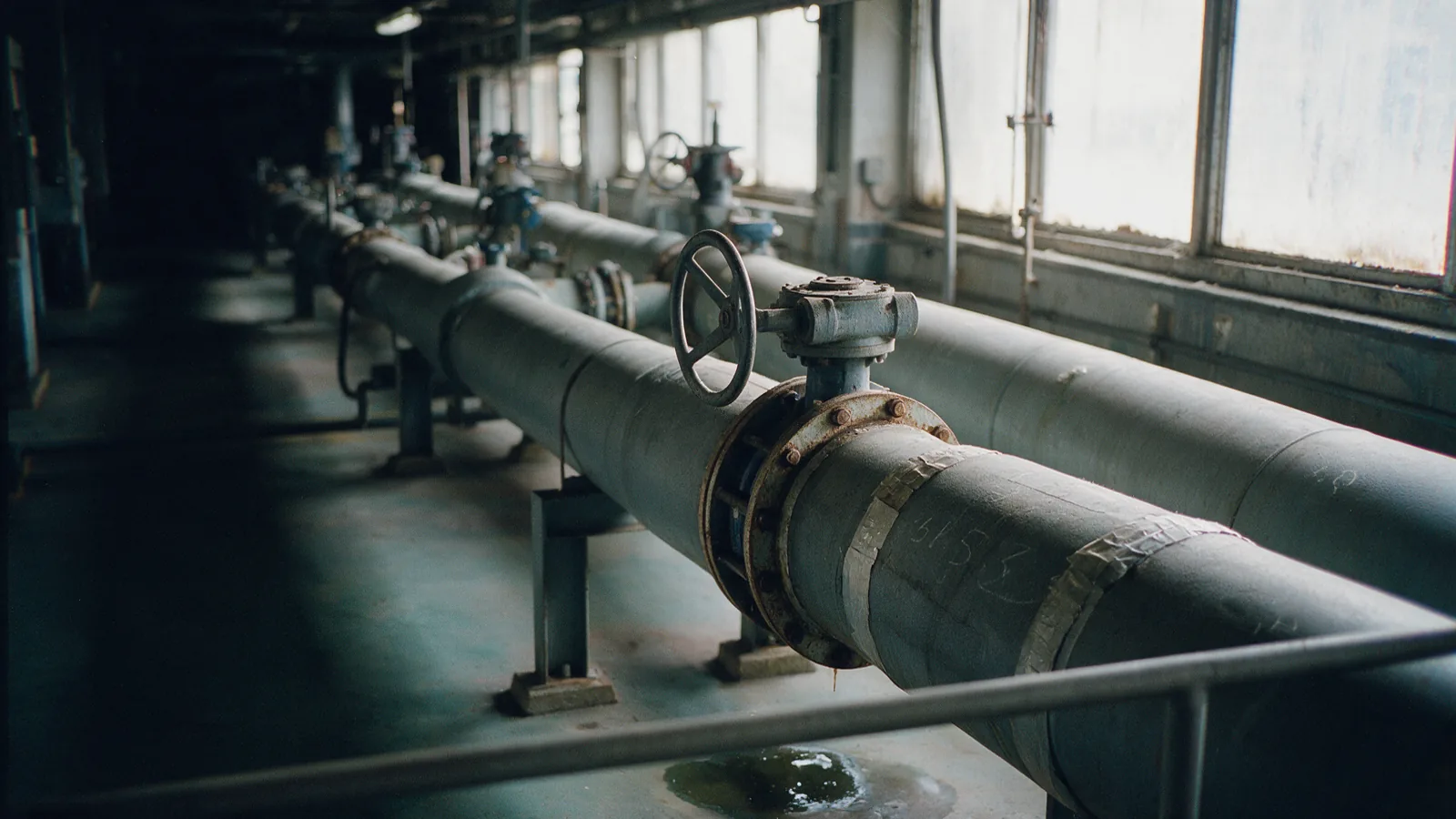
10Standards that recur across sectors (confirm the current edition)
Four documents keep appearing whichever sector the enquiry comes from. ASME B16.34 supplies the pressure and temperature rating arithmetic wherever a class number appears. API 598 and ISO 5208 define the shell and seat tests every metallic valve is proven against. EN 10204 fixes the certificate types material claims arrive on. The sector gates then stack on this common base: fire-safe, potable, sour, emission.
That is why the glossary is organised by designation, not by sector. Learn the base documents once; each sector only adds its own gate.
11Documentation each sector's specification usually demands
The document stack grows with the sector's risk. Building services usually settles for EN 10204 2.2 and approval marks on potable lines. Water and desalination add 3.1 material certificates for corrosion-critical alloys. Steam and power add test records and set-pressure evidence for protective devices. Oil and gas demand the full set: 3.1 or third-party-witnessed 3.2 certificates, fire-safe and sour-service evidence, and traceability from heat number to tag.
The sourcing and documentation guide defines every document in that stack. The rule from the enquiry method applies in every sector: name the documents at order, because none can be raised later.
12Product lines relevant by sector, and where to go next
The six product lines we supply map onto the grid. Hydronic lines serve sections 03 and 07, the steam-side line 06 and 08, the valve and check-valve lines 04 and 05, and the damper line the air side of power and buildings. Every guide behind this page is indexed under Insights. State the sector and the service condition, and the reply resolves family, material and gate.
Enquiry Dubai
Send the sector and the service condition.
State the sector, the medium with its design pressure and temperature, and any qualification the specification gates on. We reply with the family, the material, the lines and the documents acceptance needs.
Send an enquiry