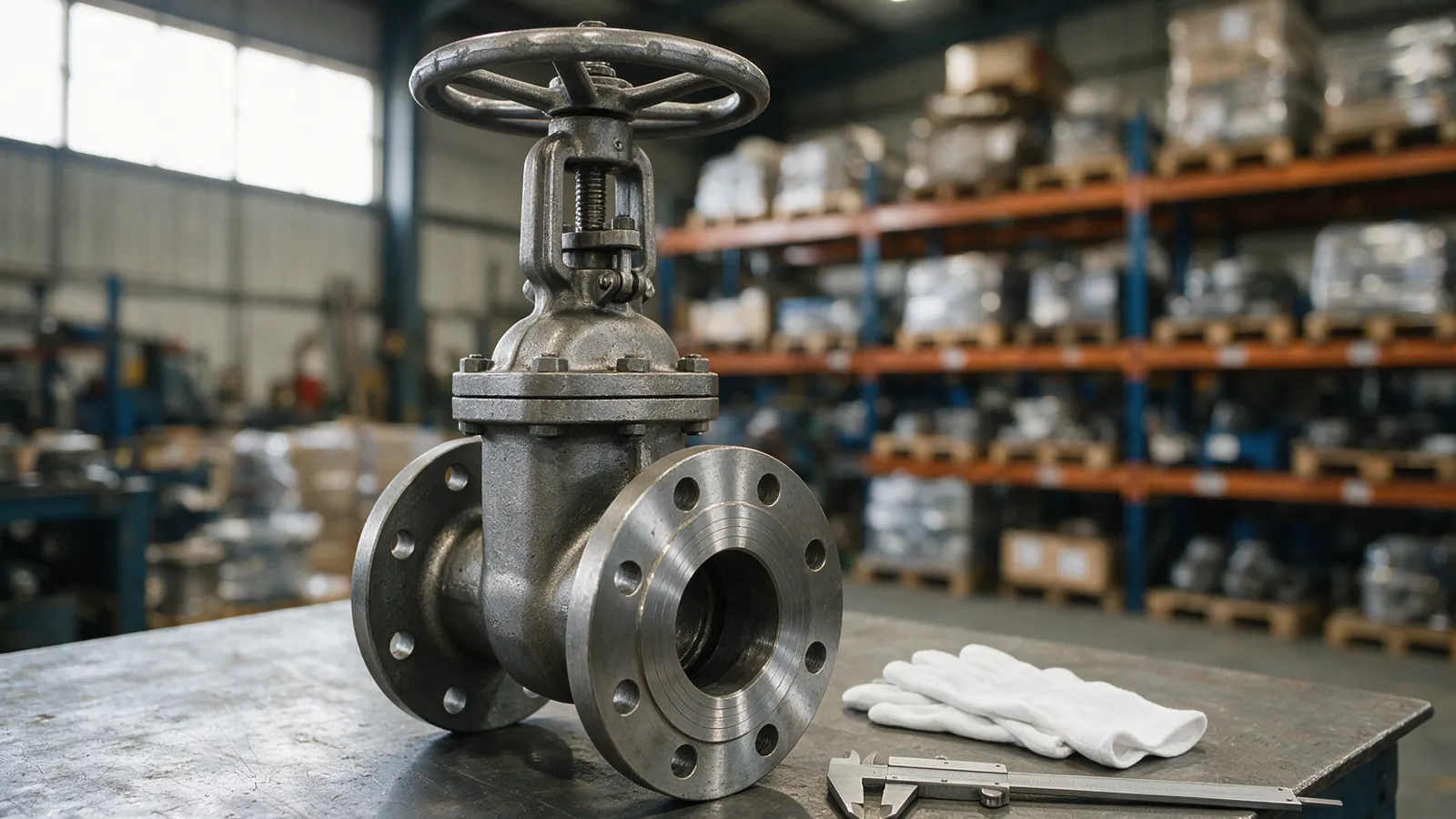
Is an API monogrammed valve better than one without the mark?
Not by itself. An API Monogram proves that the valve's maker holds a licence from the American Petroleum Institute and is warranting that product against an API specification. API's own programme page describes the marks as the licensees' warranty "to API and purchasers that the marked products comply in every aspect with the applicable API Specification/Standard" "in effect at the time of manufacture". The warranty is the maker's, given to API and to the buyer.
An API Monogram fixes one specification and one date, and nothing else. It is not a grade, not a quality band and not a ranking against an unmarked valve. A valve without the mark may be built to the same specification; its maker simply is not licensed to apply API's mark to it. Compare two offers on the specification named, the test records supplied and the material certificates, not on whether a mark is present.
What the licence costs the maker is worth knowing, because it is the substance behind the mark. API's Monogram Licensing Program Requirements, Revision 20, requires a documented and functioning quality management system meeting API Spec Q1 including its Annex A, plus at least one applicable API product specification. Issuing the licence depends on "satisfactorily passing an on-site audit of the Organization's facility and processes by API through its designated auditors". After that, API audits the management system on site at least once every calendar year, and a renewal audit falls every three years or sooner at API's discretion.
The audit is of the facility and its processes, not of the valve in front of you. That one sentence is the difference between what a monogram proves and what a buyer usually wants it to prove.
| Question | Does the monogram answer it? |
|---|---|
| Did a licensed facility make this product? | Yes. That is what the mark represents |
| Does that facility run a quality system meeting API Spec Q1? | Yes. A Q1 system is a condition of the licence |
| Which edition of that specification? | The one in effect at the date of manufacture |
| Has API approved or endorsed the product? | No. The licence forbids saying so |
| Has this particular valve been pressure tested, and to what? | No. That is a test record, not a mark |
| Does the trading company that quoted it hold the licence? | No. Distribution alone cannot be licensed |
Does an API Monogram mean API approved the valve?
No, and API says so in the terms its licensees sign. Revision 20 bars a licensee from using the mark, the licence number, the institute's name or the description API "to indicate API approval or endorsement" of its products, in advertising or otherwise, and extends that to shipping documents, testing records and contracts.
A quotation offering an API-approved valve has described something the licence behind the mark expressly forbids. What a licensee may do is "conform with marking requirements of API standards" and "refer to API standards in contracts or purchase orders". That is the legitimate use a datasheet makes of the name.
A second reading is worth closing off. Any manufacturer may state that a product meets an API specification; only a licensee may apply the mark. The licence commits its holder to use the monogram "only on products that meet all of API's requirements", and to use the licence number only in conjunction with the marking of products that meet the applicable specification. Meeting a standard and being licensed to mark it are different claims, and only one of them has been audited by the publisher.
What has to be marked beside an API Monogram?
An API Monogram must be marked with the licence number and the date of manufacture. Revision 20 is explicit on all three points: the mark is used "in conjunction with the license number and date of manufacture", the licence number is never marked on its own, and it has to sit close to the mark.
A monogram with no licence number beside it does not satisfy API's own marking rule, whatever else is true of the valve. It is the cheapest thing to check on a nameplate photograph, before any paperwork is requested.
The date matters because the warranty is tied to it. Unless the product specification defines it otherwise, Revision 20 defines the date of manufacture as "the date of the manufacturer's final acceptance of the finished product". That is neither the order date nor the shipping date.
A valve drawn from long-held stock can be warranted against an edition of the standard a current project no longer names. API's own publication record shows how fast that gap can open: on 5 September 2024 API announced Addendum 2 to API 6D, 25th Edition, adding Annex M for hydrogen gas service. "Updating API 6D to include Annex M for hydrogen gas service is a proactive measure that meets the evolving needs of the oil and natural gas industry," said Anchal Liddar, API Senior Vice President of Global Industry Services, in API's announcement. A 6D valve made before that date carries no part of it.
Can a valve supplier or a stockist hold an API Monogram licence?
No. Revision 20 sets a manufacturing capability bar, and trading does not clear it. A facility whose capabilities are limited to "buying, selling and/or distributing finished products and materials" does not meet the manufacturing capability requirements to produce new products, and "shall not be licensed or be the basis for licensing" under the programme.
An API Monogram licence belongs to the facility that made the product, at the specific site API audited. The same bar rules out a facility that only checks and tests finished goods, one that only designs, one that only strips and rebuilds, and one that only repairs or remanufactures. A buyer checking a monogram claim therefore asks for the maker's licence number and the maker's licensed facility, never the trading company's.
Subcontracting is allowed, within limits. Revision 20 says that "even though subcontracting is permitted, the API Monogram Program is designed to identify Organizations that have demonstrated the ability to manufacture equipment that conforms to API specifications", and that API may audit a licensee's subcontractors at the organisation's own expense where it decides further review is warranted.
An API Monogram licence is also non-transferable. Licensed organisations must notify API of location, name and ownership changes, and API notes that an ownership change may require licence numbers to be re-issued. A licence number copied from a brochure printed before a takeover is worth re-checking.
How do you check an API Monogram claim before you order?
Look the licensee up on API's published directory. Revision 20 describes the API Composite List as "an online Directory of API Monogram Licensees and Management System Registered Organizations", carrying facility-specific details and "a listing of the organization's licenses, past and present", which "includes licensed products, license number, license status, and any relevant dates as determined by API".
The API Composite List shows past as well as present licences, with the status and the dates API chooses to publish. It also records the facility's address and contact details and the number of employees reported to API, so it answers who and where, not only whether.
Three answers on a quotation make that lookup possible, and they are worth asking for by name:
- The manufacturer's legal name and the facility the valve was made at. Licensing is site-specific, so a maker with several plants may hold a licence at one and not another.
- The API specification and the product the licence covers. An application identifies "the API Specification and products for which you are requesting licensing", from API's own Licensing Information Forms, so a licence covering one product is not a licence covering the next.
- The licence number as marked on the valve, and the date of manufacture marked with it.
Those three either reconcile with the Composite List or they do not, and the check costs only the time. It is the same discipline that makes a supplier's paperwork worth reading rather than filing, set out in our guide to the valve documentation a buyer should demand.
API Monogram or APIQR registration: which does a supplier mean?
They are two different things, and "API certified" does not say which. API's own programme is titled the API Monogram, Repair and Remanufacture and APIQR programme, and the Composite List is a directory of "API Monogram Licensees and Management System Registered Organizations". A Monogram licence is held by a manufacturing facility and attaches to products. A management system registration attaches to an organisation's own management system.
Ask a supplier which of the two it holds, then ask separately for the valve maker's Monogram licence number. The answers are not interchangeable, and only one of them can be marked on a valve.
Repaired and remanufactured equipment sits outside the Monogram programme. API's marks are titled the API Monogram and Repair and Remanufacture Marks, and Revision 20 bars a facility limited to repairing or remanufacturing used or damaged products from being licensed under the Monogram Program. So on a refurbished valve the question is which mark and which programme, not whether the valve is still monogrammed.
What does an API Monogram not replace in the valve document pack?
An API Monogram does not replace a test record, a material certificate or an emissions class. The mark speaks to how the product was made and what it is warranted against. The rest of the pack speaks to this valve, this body of metal and this test rig.
An API Monogram and a pressure test report answer different questions, and a specification that asks for one has not asked for the other. On a European-referenced project the pressure test designation is likely to be EN 12266-1, covered in our guide to EN 12266-1 valve pressure testing. A stem sealing requirement is written against ISO 15848-1, explained in our guide to ISO 15848-1 fugitive emission classes. Material traceability is an EN 10204 certificate type. None of those is implied by a mark on the body.
One duty inside the programme explains an occasional request a buyer sees. A licensee must hold an official active subscription to every API document in its licence scope, watermarked with the organisation's own name, and API states that the technical requirements in the current English language version "shall be the only acceptable manufacturing criteria to be used by the licensee or applicant organization". A translated copy is not an acceptable substitute.
A licensee's obligations are not frozen at the date the licence was signed. API publishes programme advisories that it describes as "part of the Program Requirements", with compliance compulsory, and leaves it to the licensee to keep checking for them.
When may an actuated valve assembly carry the monogram?
Only in narrow circumstances, and the rule is written per specification. For valves under API Spec 6A, API's Advisory 14, dated 5 August 2026, says a licensee "may Monogram the actuated valve assembly ONLY if" three things hold at once: the licensee made the valve itself, separately from the actuator; the valve is not already marked as a finished valve or as prepared for an actuator; and the licensee did the assembly.
An assembly put together by a third party from an already monogrammed bare valve and a bought-in actuator is not itself a monogrammed assembly. The actuator itself need not carry a mark: Advisory 14 notes that it "may be obtained externally", and that "the actuated valve assembly may be Monogrammed even if the actuator is not monogrammed separately". What is not allowed is stacking the two marks, and a valve already monogrammed as prepared for actuator has to have that mark removed before the assembly is monogrammed.
The same advisory shows how far per-specification rules diverge. For API Spec 6A it also covers individual serialisation and where on the valve the mark goes. For the casing and tubing specification it sets out what a pipe mill or a processor must itself be able to do at its own licensed site before the mark may be applied there. API monogrammed is never a complete sentence: the specification has to be named with it. The mounting interface between valve and actuator is a separate question again, dimensioned under ISO 5211 and covered in our guide to ISO 5211 actuator mounting pads.
Frequently asked questions
Our specification names an API standard. Does that require a monogrammed valve?
Not of itself. A manufacturer may state that a product meets an API specification without holding a licence, and only a licensee may apply the mark. If the project needs a marked valve, the specification has to say so and name the API specification the mark must be against, because the mark alone does not name it. If the project only needs conformity, say that instead and ask how the maker evidences it.
What do we do about a monogram claim we think is wrong?
Raise it with API. A licensee agrees to notify API if it has evidence that marked products do not comply, and to take whatever corrective action API deems necessary. API also reserves the right to notify vendors, governmental authorities and potential users of improper or unauthorised use of the mark. Start by checking the licence number and facility on the Composite List, then contact API with what you found.
Which API specifications can a valve be monogrammed against?
Whichever ones API currently licenses, and the list is API's own. Revision 20 directs applicants to the Licensing Information Forms on api.org for the products that can be licensed, so the list changes as API changes it. Ask the maker which specification and product category its licence names, then confirm both against the Composite List entry for that facility.
Which valve a line needs comes before any of this, and that is the subject of our valve selection guide. How to read a supplier rather than a valve is in choosing a valve supplier in Dubai, and the wider paperwork sequence is in sourcing and documentation.
Flowsynergy supplies industrial valves and flow-control equipment into the UAE and the wider Gulf. Send the maker, the facility, the specification and the licence number from the quotation with your enquiry, and see technical support and testing for how documentation is handled. More on specifying valves and the paperwork that comes with them is collected in our insights.
Sources, read 10 October 2026. The American Petroleum Institute's own programme page, API Monogram, Repair and Remanufacture and APIQR: Program Documents, for what the marks warrant to API and purchasers, the title of the API Monogram and Repair and Remanufacture Marks, and the Composite List description. API's API Monogram Licensing Program Requirements, Revision 20, FM-002, for API's ownership of the certification mark, the quality management system and audit conditions, the surveillance and renewal audit frequencies, the use and misuse clauses quoted above, the marking rule, the definition of the date of manufacture, the manufacturing capability bar, the subcontracting and non-transferability clauses, the Licensing Information Forms, the Composite List entry, the document subscription requirement, the compulsory status of programme advisories, and the licensee's duty to notify API of non-complying product. API's Advisory 14, Monogram Program License-Specific Requirements, 5 August 2026, for the conditions on monogramming an actuated valve assembly under API Spec 6A, its notes on the actuator, and the minimum manufacturing requirements it sets for a pipe mill and a processor under the casing and tubing specification. API's news release API Updates API 6D to Address Hydrogen Gas Service, 5 September 2024, for Addendum 2 to API 6D, 25th Edition, and the quotation from Anchal Liddar. Saved copies of all four are kept with this page's working papers. EN 12266-1, ISO 15848-1, ISO 5211 and EN 10204 are named here as designations only; each is covered on its own page on this site. This page summarises API's published programme documents in our own words and quotes only short marked runs from them, each attributed to the document it comes from. It reproduces no table or list of requirements from any standard, and it states no test pressure, duration, acceptance value or fee. Buy the current API documents from API for the requirements themselves, confirm every line against the maker's own marking and licence records, and your purchase order governs.