Variable-flow systems
Fan-coil and air-handling coils on a two-port, variable-flow chilled-water system, and every district-cooling building connection. The regulator holds each coil at its scheduled flow while everything around it modulates.
Specify a pressure-independent control valve where the terminal modulates and differential pressure varies. That covers most fan-coil and air-handling coils on chilled-water and district-cooling networks. It holds design flow whatever the system pressure. Specify a static balancing valve where flow is constant or the branch is small. Mixed systems often use both.
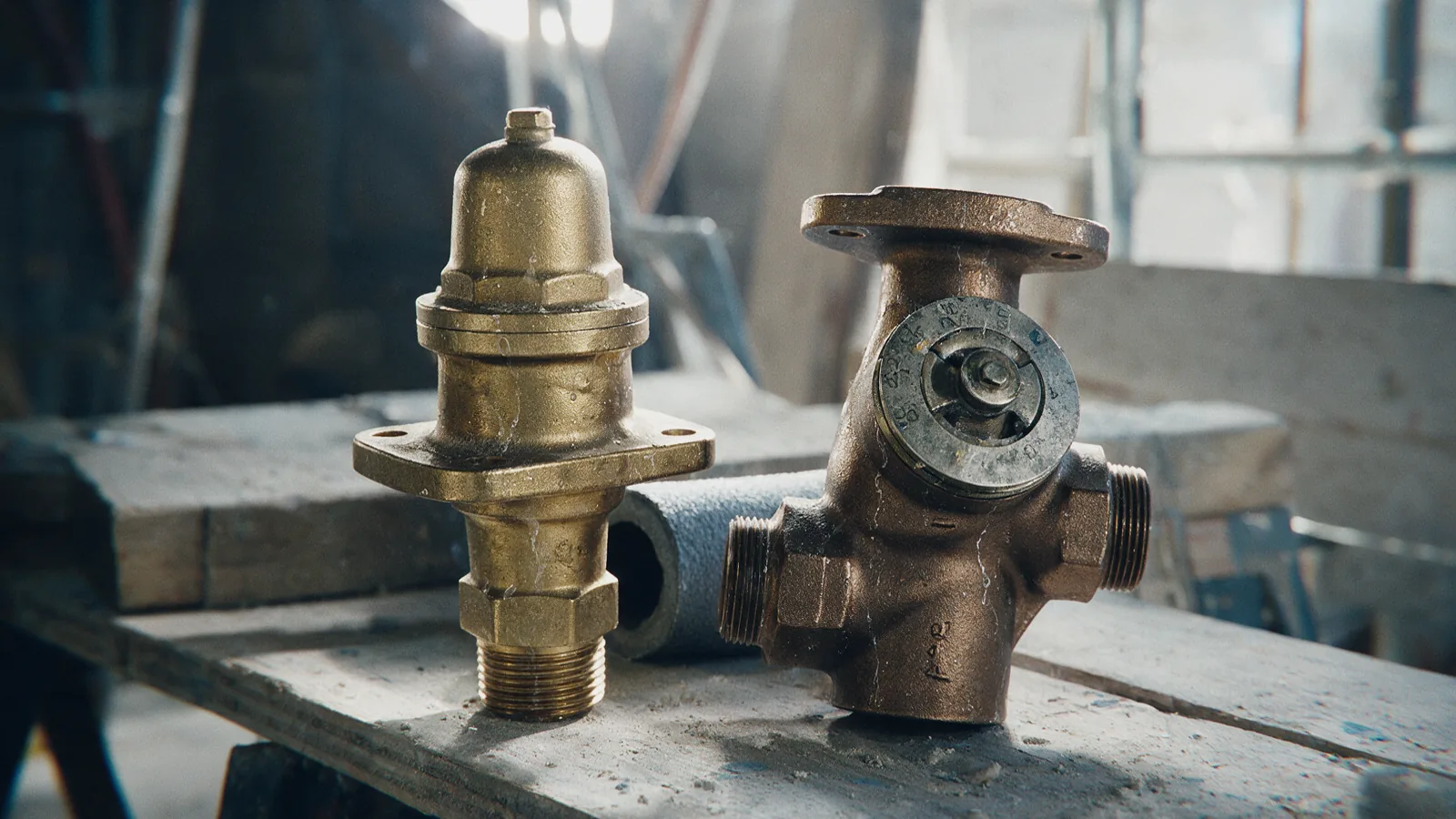
If the terminal's control valve modulates and differential pressure varies, it needs a pressure-independent control valve. That covers almost every fan-coil unit, air-handling coil and chilled beam on a variable-flow network, plus every district-cooling building connection. Where flow is constant, the branch small or the load fixed, a static balancing valve does the job far cheaper.
Most buildings contain both: PICVs at the modulating terminals, static valves on the constant-flow primary and bypasses. The mistake is expensive either way. Static valves on a variable-flow system drift out of balance the day after commissioning. PICVs on a constant-flow branch buy regulation nothing uses. The district cooling and HVAC guide sets this in context.
A static balancing valve is a globe valve with a calibrated scale and two test points. The commissioning engineer sets the handwheel, measures the differential and reads flow from the chart. The resistance is then fixed. It suits only the pump speed and valve positions that existed when it was set.
A dynamic balancing valve, or automatic flow limiter, uses a spring-loaded cartridge to hold flow roughly constant as pressure rises. It removes proportional balancing but still needs a separate control valve. The two fight when that valve throttles.
A PICV puts three functions in one body: a differential-pressure regulator holding a constant ΔP, an adjustable flow limiter setting maximum flow, and the modulating control valve driven by an actuator. The regulator removes the pressure variation before the control port. So the control valve sees the same ΔP at every load and pump speed, giving it authority close to one. The deeper article works through the cartridge mechanics.
Nine criteria, side by side. The lifted cell wins its row. Rows with no lifted cell are a matter of system design.
| Criterion | PICV | Static balancing valve |
|---|---|---|
| What it controls | WinnerFlow held at the set value while the control valve modulates | A fixed resistance set once; flow follows whatever the network delivers |
| Where it sits | On the terminal return, replacing control valve and regulating valve together | On the branch or terminal return, in series with a separate control valve |
| Authority and ΔP range | WinnerClose to one across the stated ΔP range; the regulator removes the pressure variation | Falls as pumps turn down or other terminals close; whatever the circuit leaves it |
| Commissioning effort | WinnerSet each dial to the scheduled flow; verify ΔP at the index terminal | Proportional balancing of every terminal against every other, repeated after any change |
| Response to load change | WinnerHolds design flow as neighbouring terminals open and close | Every terminal shifts when any one moves; low-ΔT drift follows |
| Dirt tolerance | Diaphragm and cartridge are sensitive; a strainer upstream is not optional | WinnerA robust globe or ball body that shrugs off most debris |
| Cost per point | Higher: one device doing three jobs, plus an actuator | WinnerLower: a simple valve, cheaper still on small branches |
| Maintenance and failure mode | Cartridge keeps limiting flow if the actuator fails, and is itself replaceable | Nothing to fail, but nothing to protect the system from the control valve either |
| When it wins | Variable-flow networks, district-cooling connections, any modulating coil | Constant-flow branches, small fixed loads, bypasses, retrofits with good existing controls |
The table says which device is better at each criterion. The four cases below say which one to specify on a Gulf chilled-water project, and where each goes wrong.
Fan-coil and air-handling coils on a two-port, variable-flow chilled-water system, and every district-cooling building connection. The regulator holds each coil at its scheduled flow while everything around it modulates.
A PICV below its minimum ΔP cannot regulate. Index terminals on long branches and undersized pumps are the usual culprits. Debris stalls the cartridge, so fit a strainer and flush before the valves go in.
Primary loops, constant-speed secondary pumps, small fixed loads and bypass lines. On a refurbishment with good control valves already fitted, a static valve costs a fraction of replacing every terminal.
A static setting is correct at one operating point and wrong at every other. As terminals close, over-supplied coils pass more flow at a smaller ΔT and the return warms. Plant efficiency and the district-cooling tariff pay for it.
An electronic PICV replaces the diaphragm regulator with a flow sensor and an algorithm in the actuator. The actuator measures flow and positions the valve to hold the set point. It can report flow and energy to the building-management system, and has no minimum ΔP. A mechanical PICV regulates with a diaphragm and a spring.
We favour the mechanical cartridge on most terminals, and the reason is the failure mode. When an electronic PICV loses its sensor, power or signal, the flow limit goes with it. When a mechanical PICV's actuator fails, the regulator and flow limiter keep working. The terminal is over-cooled rather than over-flowed. The cartridge is replaceable in a ceiling void; a failed electronic unit is a controls call-out. Where per-terminal energy metering is needed, the electronic valve earns its place.
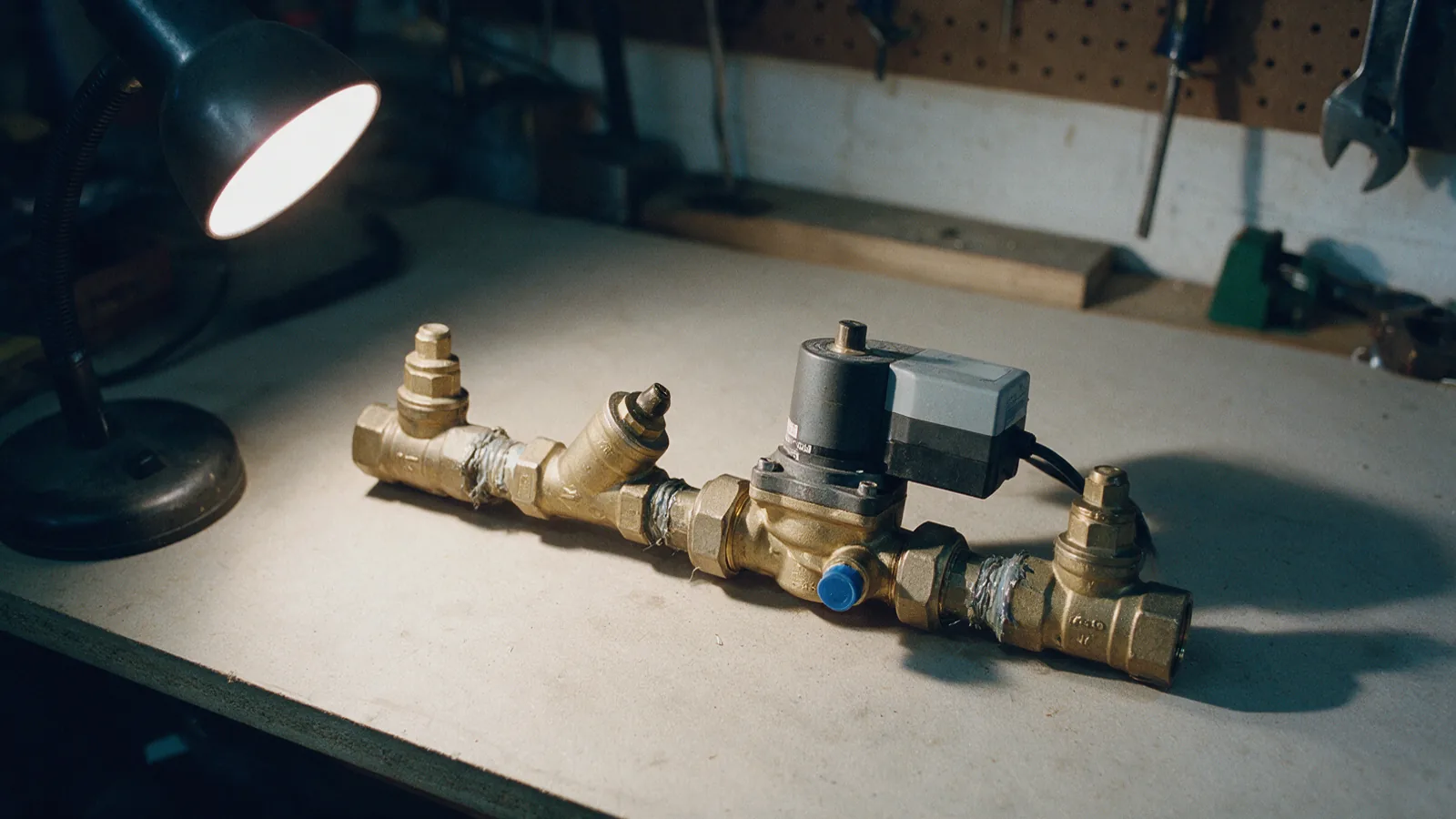
Four figures from the terminal schedule select the valve. Design flow picks the size: the scheduled flow should sit in the upper part of the valve's setting range. Available differential pressure must exceed the valve's stated minimum at design flow, and stay below its maximum at the terminal nearest the pump. Both figures come from the manufacturer's data sheet and go on the schedule.
Temperature decides the elastomers: a PICV on a heating circuit needs seals and a diaphragm rated for it. Water quality is the figure most often left blank. Suspended solids, magnetite and installation debris stall the regulator's small port. Specify a strainer upstream, a flushing regime before fitting, and a water-treatment specification the manufacturer accepts. Glycol raises viscosity and shifts the flow chart, so state the concentration on the enquiry. Body material follows the water. Dezincification-resistant brass or bronze in the threaded sizes. Ductile iron or steel with EN 1092-1 flanges above.
Much of Dubai is cooled by district cooling, and a connection is billed on the chilled water it consumes. A building returning water only a few degrees warmer is paying for flow it never turned into cooling. Most contracts carry a low delta-T clause that charges for exactly that. Low ΔT has one dominant cause: terminals passing more water than their coil can use.
That is the PICV's job. Holding each coil at its scheduled flow keeps the coil's leaving-water temperature up, and the building's return temperature with it. Three Gulf conditions sharpen the case. The cooling load runs year-round, so a valve that drifts out of balance is never reset in an off-season. Ceiling-void condensation and long construction programmes leave debris in the loop, which is why the strainer and flushing regime are specified with the valve. And the pressure available at a high-rise terminal varies enormously between plant room and roof. A static valve cannot follow that variation; a PICV is built to absorb it. The Gulf selection article goes further, and HVAC and district-cooling valves covers the plant-room equipment.
Sizing a PICV is a table look-up once flow and available ΔP are known. Pick the body size whose setting range brackets the design flow with margin. Confirm the minimum ΔP is available at the index terminal and the maximum is not exceeded at the nearest. Sizing a static balancing valve means choosing a body that gives a measurable pressure drop at design flow. Too large a valve and the reading is lost.
Commissioning is where the difference is paid back. A static system is proportionally balanced: every terminal measured, every valve adjusted, repeated until the proportions hold and again after any alteration. A PICV system is set: each dial turned to the scheduled flow, the ΔP at the index terminal verified, and the system is done. Verification is the same for both. Measure flow at a sample of terminals against the schedule, within the commissioning code's tolerance, and record it with the valve settings.
Reference values: confirm against the current edition of the standard and the manufacturer's rating table.
Hydronic valves are governed less by pressure-rating documents than by the commissioning codes that say how flow is set and proved. Both are listed; the glossary defines each designation.
| Designation | What it fixes | Kind |
|---|---|---|
| BS 7350 | Double-regulating globe valves and flow-measurement devices for heating and chilled-water systems: the static balancing valve's design document. | Design |
| EN 1092-1 / ASME B16.5 | Flange dimensions and PN / class ratings for flanged PICV and balancing valves above the threaded sizes. | Ends |
| EN 12266-1 / ISO 5208 | Pressure testing of metallic valves: shell test and the seat-leakage rate a specification calls for on the isolation function. | Test |
| ASME B16.34 | Pressure and temperature ratings for the steel-bodied sizes. The PN or class on the body is read against the material group. | Ratings |
| CIBSE Commissioning Code W | Water distribution systems: the commissioning method, including proportional balancing and flow verification. | Method |
| BSRIA BG 2 | Commissioning water systems: the practical procedure and the tolerances on measured flow. | Method |
| ASHRAE Handbook: HVAC Systems and Equipment | Valve authority, variable-flow system design and the case for pressure-independent control. | Reference |
| EN 10204 | Inspection document types for the body material: 2.2 non-specific, 3.1 mill-certified. | Document |
A PICV is only as good as the chart that tells the engineer what its dial means. Ask for the five items below with the quotation. The sourcing and documentation guide explains what each should contain.
The manufacturer's dial-setting-to-flow table for the exact model and size, with the ΔP range over which it is valid. Without it the commissioning engineer sets a number that means nothing.
The differential pressure below which the regulator stops working and above which the valve is out of rating. Both go on the terminal schedule.
Shell and seat test to EN 12266-1 or ISO 5208, stating pressure, medium and duration. A PICV's isolation function is tested like any other valve.
EN 10204 2.2 or 3.1 for the body; dezincification-resistant brass or bronze should be named as such, not assumed.
Stroke, force, control signal and the position the valve takes on loss of signal and loss of power. State them separately; they are not the same event.
Buying the PICV, the isolation valves and the strainer together matters when all three must fit the same hose kit. Which of our trading brands covers a given PICV or balancing duty is confirmed per enquiry. The brands are listed on the trading brands page; appointment status with any principal is To confirm. Chilled-water guides are indexed under Insights.
Enquiry Dubai
State the design flow and the available differential pressure at the index and nearest terminal. Add the supply and return temperatures, the pipe size and whether the load modulates. We reply with the device, body size, setting and documents.
Send an enquiry